

Our experts reviewed the latest {category_name } to help you compare quality, performance, durability and overall value before making your purchase.




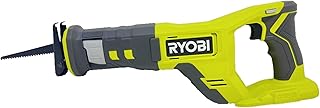


Choosing a Ryobi cordless reciprocating saw is less about finding the highest specification and more about matching the saw's cutting performance, size, battery requirements and handling characteristics to the work you actually intend to do. Ryobi's 18V ONE+ range includes compact models for restricted spaces, conventional cordless reciprocating saws for general DIY and renovation work, and higher-performance brushless models aimed at more demanding cutting and demolition tasks. For buyers who already own Ryobi ONE+ batteries, platform compatibility can be one of the most important considerations. Ryobi states that its ONE+ system allows compatible 18V batteries to power a broad range of tools, making a bare-tool purchase potentially more practical for an existing ONE+ user than buying another battery and charger with every machine. The right model should therefore be assessed on more than price. Stroke length, strokes per minute, motor technology, vibration control, overall size, shoe adjustment, blade changing, battery capacity and the type of material being cut can all have a noticeable effect on real-world usability. When comparing Ryobi reciprocating saws, the following specifications deserve particular attention: The RRS18X-0 sits towards the performance-focused end of the current Ryobi ONE+ reciprocating saw range. Ryobi describes it as an 18V ONE+ HP brushless reciprocating saw designed for demanding cutting and demolition work. Its published specification includes a 32mm stroke length and a maximum no-load rate of 3,200 strokes per minute. The combination of a long stroke and high stroke rate makes this type of machine particularly relevant to users tackling timber, metal, plastic, piping and demolition materials. The model also incorporates a tool-free blade clamp, adjustable shoe, variable-speed trigger, lock-on control, LED lighting and anti-vibration technology. Brushless technology is especially worth considering if the saw will be used frequently or for demanding applications. The motor is designed without conventional brushes, while Ryobi's ONE+ HP system uses electronic control to manage power delivery. That does not mean every buyer needs an HP brushless model, but it can make the additional specification easier to justify for renovation, demolition and heavier-duty cutting. The RRS18X-0 is supplied as a bare tool, so buyers who do not already have a suitable ONE+ battery and charger need to factor those components into the overall cost. Ryobi also publishes application-specific battery guidance and cutting figures, illustrating why battery capacity should be considered alongside the saw rather than treated as an entirely separate purchase. The RRS18C1-0 takes a different approach. Rather than concentrating solely on maximum cutting capability, its design prioritises compactness and access. Ryobi describes it as an HP brushless compact reciprocating saw intended for cutting materials including wood, metal and plastic, with a 23mm stroke and a maximum rate of 3,200 strokes per minute. This distinction is important when comparing reciprocating saws. A larger, more powerful machine is not automatically the best choice for every task. A compact body can be valuable when working overhead, inside confined areas or around existing structures where there is limited room to manoeuvre. The compact design also makes this model relevant to users who regularly carry tools between different areas of a property. It is worth comparing the physical dimensions and grip arrangement rather than judging the saw solely by voltage or motor terminology. The R18RS-0 is a conventional 18V ONE+ reciprocating saw aimed at general cutting and demolition work. Ryobi lists features including variable-speed control, a tool-free blade clamp, adjustable shoe and lock-on control. This type of model can make sense for DIY users who need a general-purpose reciprocating saw without necessarily moving into the HP brushless range. It is particularly relevant for applications such as dismantling timber, cutting pipe, removing old fittings and tackling occasional renovation projects. When assessing the R18RS-0 against newer or more powerful Ryobi models, buyers should look beyond the headline specification and consider how often the tool will be used. Occasional DIY users may benefit more from a sensible balance of capability and cost than from paying specifically for features that will rarely be exploited. The RRS1801M is another established 18V ONE+ reciprocating saw. Ryobi's current UK listing identifies it as a bare tool and highlights its suitability for cutting wood, metal and plastic. Published Ryobi catalogue information identifies the RRS1801M with a 22mm stroke and a no-load rate of up to 3,100 strokes per minute. Its comparatively straightforward specification makes it worth considering for buyers who want a basic ONE+ reciprocating saw for general-purpose work. It is particularly important, however, to check the current UK specification and retailer package before buying, because older tools can remain listed alongside newer models and product bundles can change. Ryobi's UK reciprocating-saw category also includes compact and conventional ONE+ models alongside its HP brushless machines. The current category listing shows several cordless reciprocating saws rather than a single universal model, reinforcing the importance of comparing the intended application before choosing one. Compact models are particularly attractive where access matters more than maximum cutting speed. If the main job involves cutting pipe behind cabinetry, trimming timber in awkward positions or making overhead cuts, physical size and balance can be more useful than simply choosing the saw with the highest numerical specification. Two of the most frequently quoted reciprocating-saw specifications are stroke length and strokes per minute. They describe different aspects of the mechanism and should not be treated as interchangeable. Stroke length is the distance travelled by the blade during one reciprocating cycle. A longer stroke moves the cutting teeth through a greater distance and can be useful when rapid material removal is the priority. Strokes per minute describes how frequently the blade completes its reciprocating movement. A high stroke rate can support fast cutting, particularly in suitable materials and with an appropriate blade. Neither number tells the complete story. Motor output, electronic control, blade design, tooth configuration, material thickness, battery condition, operator pressure and the geometry of the cut all influence the result. A saw with a very high maximum stroke rate is not necessarily faster in every application. Brushless motors are one of the clearest differentiators between conventional and HP Ryobi cordless tools. Ryobi positions ONE+ HP as its higher-performance range and uses brushless motor technology alongside advanced electronics. For a reciprocating saw, brushless technology can be particularly relevant because demolition cutting places substantial demands on the motor. Frequent starts, stops, changes in resistance and cutting through different materials can make electronic motor management valuable. That does not automatically make a brushless model the best purchase for every household. If the saw will only be used for a handful of light DIY jobs each year, a less expensive conventional model may provide sufficient capability. Conversely, users who regularly renovate properties, dismantle structures or cut substantial quantities of timber and metal may have a stronger case for choosing an HP brushless model. A cordless reciprocating saw is only part of the system. Battery selection affects both runtime and handling, so it should be included when comparing the total ownership proposition. Lower-capacity packs can reduce the overall weight of the tool and may be attractive for short cuts, overhead work and situations where manoeuvrability is more important than maximum runtime. Larger-capacity batteries can be more appropriate for extended cutting sessions and demanding applications. The trade-off is additional weight, which can become noticeable when the saw is held away from the body or used above shoulder height. If you already own compatible Ryobi ONE+ batteries, a bare-tool reciprocating saw can be a logical way to expand the system. Ryobi's ONE+ platform is specifically designed around using compatible batteries across a large collection of tools. New buyers should compare the cost of the complete setup rather than looking only at the bare-tool price. A saw, battery and charger may represent a substantially different purchase decision from a bare tool when no existing ONE+ equipment is available. The reciprocating saw is only as effective as the blade being used. Blade selection should therefore form part of the buying decision rather than an afterthought. Blade length should also be considered. A blade that is unnecessarily long can flex more readily, while one that is too short may not provide sufficient reach for the workpiece. The correct length depends on the material thickness, access and desired cutting action. For timber, a reciprocating saw is particularly useful when precision circular-saw cuts are not the priority. It excels at rough cutting, dismantling, trimming and working in locations where a conventional circular saw would be awkward. For clean finish carpentry, however, a reciprocating saw may not be the first choice. A circular saw, track saw or mitre saw can generally be more appropriate where straightness and finish quality are central requirements. A reciprocating saw becomes especially useful when the work involves removing existing timber rather than producing a presentation-quality finished edge. This is why it is common to associate reciprocating saws with renovation and demolition tasks. Metal cutting requires a suitable blade and a more controlled approach than rough timber demolition. The blade must be appropriate for the material, and the workpiece should be securely supported wherever possible. For pipework, the compact dimensions of some reciprocating saws can be a significant advantage. A smaller body can make it easier to position the blade around pipework or inside restricted areas. Do not judge a metal-cutting setup solely by the saw's maximum strokes per minute. Blade selection, material thickness, tooth pitch, cutting technique and heat management can have a substantial influence on performance and blade life. Demolition is one of the applications where a reciprocating saw can be particularly valuable. It can cut through timber, pipework and various construction materials without requiring the workpiece to be presented in the same way that it would be for a conventional saw. Before cutting into an existing structure, identify hidden electrical cables, plumbing, gas services and structural components. A reciprocating saw is powerful enough to cut through materials that may be concealed behind surfaces, so demolition work requires considerably more planning than simply choosing the correct blade. For renovation work, the ability to change blades quickly is another practical advantage. Ryobi's current reciprocating-saw models include tool-free blade-changing systems, allowing the operator to switch between appropriate blades without carrying out a lengthy manual procedure. There is no universally correct size. The best Ryobi reciprocating saw is the one that provides enough cutting capability without becoming unnecessarily cumbersome for the work. A variable-speed trigger gives the operator control over blade movement rather than forcing the saw to operate at one fixed speed. This can be useful when starting a cut, positioning the blade or working with materials that require a more controlled approach. High speed can be useful when the material and blade permit rapid cutting, while lower speed can provide greater control in delicate or awkward situations. Experienced users can therefore make better use of a variable-speed saw than of a machine that offers only maximum output. The shoe is the part of the saw that supports the tool against the workpiece. An adjustable shoe can change the point at which the blade engages the material and can help the operator maintain a stable cutting position. Ryobi includes adjustable-shoe designs in several of its reciprocating saws. The feature can also help make more effective use of the blade because different sections of the cutting edge can be brought into service rather than repeatedly wearing one small area. Reciprocating saws naturally generate vibration because the blade moves rapidly back and forth. During short cuts this may be of little concern, but during repeated demolition work the cumulative effect can become an important consideration. Anti-vibration features, grip design and overall balance should therefore be considered alongside motor performance. A theoretically more powerful machine may be less suitable if its size, weight or vibration characteristics make it difficult for the operator to control comfortably. Comfort should never be confused with the ability to cut through material. It is a separate part of the buying decision, but an important one for anyone expecting to use the tool repeatedly. A bare tool is supplied without the battery and charger required for cordless operation. Ryobi's ONE+ system makes this format particularly relevant because existing users can potentially use batteries already owned for compatible ONE+ tools. However, a first-time buyer should not compare the price of a bare tool directly with the price of a complete kit without adjusting for the missing components. The meaningful comparison is the cost of the complete working setup. A high stroke rate looks impressive on a specification sheet, but it is only one part of cutting performance. Stroke length, motor characteristics, blade quality and application all matter. Maximum performance is not always useful if the tool is too large for the spaces in which it will be used. Compact reciprocating saws can offer a practical advantage in locations where a larger tool is difficult to position. A high-capacity battery may provide useful runtime, but the additional weight can affect comfort and manoeuvrability. Consider how the saw will actually be held rather than looking only at amp-hour capacity. Even an advanced brushless saw can perform poorly when fitted with an unsuitable or worn blade. Blade selection should match the material, thickness and intended cutting speed. Shared battery compatibility does not mean that every saw has the same motor, stroke, dimensions or intended application. Ryobi's current UK range includes several distinct reciprocating-saw designs. A bare tool may look inexpensive until a battery and charger are added. Conversely, an existing ONE+ owner may already have everything necessary to use a bare tool. Always compare the complete setup relevant to your circumstances. For occasional household repairs and light renovation, a conventional ONE+ reciprocating saw can be sufficient. Prioritise ease of use, variable-speed control, tool-free blade changing and compatibility with batteries you already own. Renovation projects typically involve a mixture of timber, pipework, plastic and demolition materials. A versatile model with good blade-changing convenience, adjustable shoe and adequate power is likely to be more useful than a saw optimised for only one material. For frequent demolition work, a brushless HP model deserves closer consideration. The RRS18X-0, for example, combines brushless technology with a 32mm stroke and 3,200 strokes per minute, alongside features intended to support demanding cutting applications. A compact reciprocating saw can be the better choice when access is the primary challenge. Ryobi's RRS18C1-0 is specifically designed around a compact HP brushless format and is positioned for work where portability and access are important. For someone already invested in the ONE+ battery platform, platform compatibility can simplify the decision considerably. The main questions become which saw offers the right combination of size, performance and features rather than which cordless battery ecosystem to adopt. Ryobi should be compared with brands such as DeWalt, Makita, Bosch Professional and Milwaukee on the basis of the complete tool system rather than headline specifications alone. Brand comparison is most useful when the buyer has identified the actual work involved. There is little value in declaring one manufacturer universally superior when the requirements can range from occasional pruning and DIY to intensive construction and demolition. Price comparison should always be based on like-for-like packages. A bare tool, a tool with a battery and a complete starter kit are different propositions even if the saw itself is identical. When checking current UK prices, compare the exact model number, battery capacity, charger type and included accessories. Retailer bundles can change, and older model numbers may remain available alongside newer products. It is also sensible to consider the cost of replacement blades and additional batteries if the saw will be used regularly. The purchase price is only one part of the longer-term cost of owning a cordless power tool. After demanding cutting work, remove accumulated dust and debris from accessible areas of the tool. Pay particular attention to the blade clamp and areas around ventilation openings, following the manufacturer's maintenance guidance. Replace damaged, excessively worn or inappropriate blades rather than attempting to force them through material. A sharp, suitable blade normally provides better control than continuing to use a heavily worn one. Inspect the adjustable shoe periodically to ensure it remains secure and operates as intended. The shoe plays an important role in maintaining contact between the tool and workpiece. Use and store Ryobi ONE+ batteries according to the manufacturer's instructions. Avoid treating a cordless battery as an interchangeable generic component; compatibility, charging and storage requirements should follow the manufacturer's guidance. Heavy cutting can place substantial demands on a cordless saw and its battery. If the tool becomes excessively hot, stop and allow it to cool rather than continuously forcing the machine through difficult cuts. Wear appropriate eye protection whenever operating a reciprocating saw. Depending on the material and environment, hearing protection, suitable gloves, respiratory protection and protective clothing may also be appropriate. Secure the workpiece wherever practical and maintain a stable stance. Keep both hands under control and avoid placing fingers anywhere near the blade path. Before cutting existing structures, establish what is behind the surface. Electrical wiring, plumbing and other concealed services can create serious hazards. Use a blade appropriate to the material and never force the saw beyond what the blade and machine are designed to handle. Follow the manufacturer's operating instructions and safety information for the specific model. Reciprocating saws are primarily designed for versatile cutting and demolition rather than precision joinery, but technique can still make a significant difference. A Ryobi cordless reciprocating saw can be a strong option for buyers who value cordless convenience and, particularly, those already using the 18V ONE+ battery platform. The range covers several use cases, from conventional general-purpose saws to compact HP brushless machines and higher-performance models such as the RRS18X-0. The key is choosing the appropriate model rather than assuming the newest or most powerful option is automatically the best. Occasional DIY work, renovation, demolition and restricted-access cutting can each favour a different balance of power, size and battery capacity. There is no single best model for every user. The RRS18X-0 is the performance-focused choice among the models discussed here, while the RRS18C1-0 is designed around compactness and access. Conventional ONE+ models can be more appropriate for buyers who want general-purpose cutting without specifically requiring an HP brushless machine. Yes. Ryobi positions its reciprocating saw range for demolition and renovation applications, with models intended for cutting materials such as wood, metal and plastic. The appropriate blade remains essential, particularly when cutting mixed or demanding materials. Brushless technology is intended to provide performance and efficiency advantages, and Ryobi uses it in its ONE+ HP range. It is most compelling for users who expect regular or demanding use rather than only occasional light cutting. Compatible Ryobi 18V ONE+ batteries are designed to work across the ONE+ tool platform. Always confirm compatibility with the exact model and follow the manufacturer's battery guidance. A bare tool can be particularly sensible if you already own compatible ONE+ batteries and a charger. If you are new to the platform, compare the total cost of the saw, battery and charger against complete kits before deciding. No. A longer stroke can be advantageous for rapid material removal, but the ideal specification depends on the material, blade and application. Compact saws may deliberately use a shorter stroke to maintain a smaller overall design. The answer depends on the application. A smaller battery can favour reduced weight and manoeuvrability, while a higher-capacity pack can be useful for longer or more demanding cutting sessions. Ryobi publishes application-specific battery information for its current models, so the manufacturer's guidance is preferable to choosing solely on amp-hour capacity. Yes. Ryobi describes its current reciprocating saws as suitable for materials including metal, although the blade must be appropriate for the particular metal and thickness. Usually not. The two tools serve different purposes. A reciprocating saw is particularly useful for demolition, dismantling, awkward access and rough cutting, whereas a circular saw is generally better suited to controlled straight cuts through sheet material and timber. There is no universal replacement interval. Blade life depends on the material, tooth pattern, thickness, cutting pressure, operating conditions and frequency of use. Replace a blade when it becomes excessively worn, damaged or unsuitable for producing controlled cuts. They can be, depending on the work. A compact model such as the RRS18C1-0 is specifically positioned for cutting applications involving wood, metal and plastic while prioritising portability and access. For extensive demolition or large timber, a larger high-performance saw may be more appropriate. Check the exact model number, current manufacturer specification, stroke length, maximum stroke rate, motor type, dimensions, battery requirements, included accessories and whether the package is a bare tool or complete kit. Also consider the blades required for your intended materials and compare the complete purchase cost rather than the headline tool price alone. The best Ryobi cordless reciprocating saw for your needs is determined by the work rather than by a single specification. For demanding demolition and high-performance cutting, the RRS18X-0 offers the most performance-oriented specification among the models covered here. For restricted-access work, the compact RRS18C1-0 places greater emphasis on portability. Conventional ONE+ models such as the R18RS-0 and RRS1801M remain relevant for buyers seeking general-purpose cordless cutting capability. Before making a purchase, compare the exact model, blade requirements, battery configuration, dimensions and intended application. For existing ONE+ owners, battery compatibility may simplify the decision; for new users, the cost of the complete cordless setup deserves equal attention. Checking the current manufacturer's specifications and comparing verified customer feedback can then help narrow the shortlist to the Ryobi reciprocating saw that best matches the way you actually intend to work.How to Choose the Best Ryobi Cordless Reciprocating Saw in the UK
Ryobi Cordless Reciprocating Saw Comparison: What Matters Most
Ryobi ONE+ Reciprocating Saw Range Explained
Ryobi RRS18X-0 ONE+ HP Brushless Reciprocating Saw
Ryobi RRS18C1-0 ONE+ HP Compact Brushless Reciprocating Saw
Ryobi R18RS-0 ONE+ Cordless Reciprocating Saw
Ryobi RRS1801M ONE+ Reciprocating Saw
Ryobi R18RSC-0 and Compact ONE+ Models
Stroke Length vs Strokes Per Minute
Why Brushless Technology Matters
Choosing the Right Ryobi Battery
Smaller Batteries
Higher-Capacity Batteries
Existing ONE+ Batteries
Blade Selection: The Often-Overlooked Buying Decision
Cutting Wood With a Ryobi Cordless Reciprocating Saw
Cutting Metal and Pipe
Using a Reciprocating Saw for Demolition
Compact vs Full-Size Ryobi Reciprocating Saws
Choose a Compact Model If
Choose a Larger or Higher-Performance Model If
Variable Speed: Why It Is More Important Than It Looks
Adjustable Shoe and Blade Contact
Anti-Vibration Design and User Comfort
What Does Bare Tool Mean?
Common Buying Mistakes
Choosing Solely on Strokes Per Minute
Buying the Most Powerful Model Without Considering Size
Ignoring Battery Weight
Using the Wrong Blade
Assuming Every ONE+ Saw Is the Same
Forgetting the Total Purchase Cost
Ryobi Cordless Reciprocating Saw Buying Guide for Different Users
Best for Occasional DIY
Best for Home Renovation
Best for Regular Demolition
Best for Tight Spaces
Best for Existing Ryobi ONE+ Owners
Ryobi vs Other Cordless Reciprocating Saw Brands
Specifications Checklist Before You Buy
How to Compare Ryobi Reciprocating Saw Prices
Maintenance Tips for a Ryobi Cordless Reciprocating Saw
Keep the Tool Clean
Inspect Blades Regularly
Check the Shoe
Look After Batteries
Allow the Tool to Cool
Safety Considerations When Using a Reciprocating Saw
How to Get Cleaner Cuts With a Reciprocating Saw
Is a Ryobi Cordless Reciprocating Saw Worth Buying?
Final Buying Checklist
Frequently Asked Questions
Which Ryobi cordless reciprocating saw is best?
Are Ryobi reciprocating saws good for demolition?
What is the advantage of a Ryobi brushless reciprocating saw?
Can one Ryobi ONE+ battery work with a reciprocating saw?
Should I buy a bare Ryobi reciprocating saw?
Is a longer stroke always better?
What battery size should I use with a Ryobi reciprocating saw?
Can a Ryobi reciprocating saw cut metal?
Can a reciprocating saw replace a circular saw?
How often should reciprocating-saw blades be replaced?
Are compact reciprocating saws powerful enough for renovation?
What should I check before buying a Ryobi reciprocating saw in the UK?
Key Takeaway