

Our experts reviewed the latest {category_name } to help you compare quality, performance, durability and overall value before making your purchase.


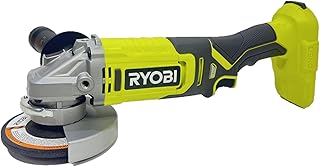


Choosing between Ryobi cordless angle grinders is less about finding the model with the highest headline specification and more about matching the grinder to the work you actually intend to carry out. A compact 115mm grinder can be a sensible choice for general DIY, maintenance and occasional cutting, while a 125mm model can offer greater disc coverage and a broader range of demanding applications. Brushless models are particularly worth considering when the grinder will be used regularly or when cutting and grinding performance is more important than the lowest initial tool cost. Ryobi's 18V ONE+ platform is an important part of the buying decision. Current Ryobi UK listings include 115mm and 125mm cordless angle grinders, including conventional ONE+ models and the higher-performance ONE+ HP brushless RAG18X125-0. Ryobi also lists starter-kit versions for buyers who do not already own a compatible battery and charger. The best option therefore depends on several factors: disc diameter, motor technology, battery capacity, switch design, handle configuration, safety features, expected workload and whether you already own ONE+ batteries. Comparing these details before purchase can prevent the common mistake of choosing a grinder based solely on price or maximum no-load speed. Disc diameter is one of the most important differences to consider. A 115mm grinder is relatively compact and can be convenient where access and manoeuvrability matter. A 125mm grinder accepts a larger disc, which can be advantageous for cutting and grinding tasks where additional working diameter is useful. Ryobi's R18AG-0 is a 115mm 18V ONE+ grinder with a stated no-load speed of 7,500rpm. The RAG18115-0 is another 115mm ONE+ option in the current range. Ryobi also offers 125mm models such as the RAG18125-0 and the brushless RAG18X125-0. Do not assume that a larger disc automatically makes a grinder better for every job. The physical size of the tool, the weight of the battery, access around the workpiece and the type of accessory being used can all influence which format is most practical. No-load speed, expressed in revolutions per minute, indicates how quickly the spindle rotates when the grinder is not under cutting or grinding load. It is useful when comparing models, but it should not be treated as a standalone measurement of cutting performance. For example, Ryobi specifies 7,500rpm for the R18AG-0 and 11,000rpm for the older R18AG7-0 brushless 125mm model. Ryobi's current ONE+ HP RAG18X range is designed around higher-performance brushless technology, with the manufacturer describing the HP series as its advanced brushless range. In practical terms, the motor's ability to maintain useful performance under load, the battery's condition and capacity, the accessory being used and the material being worked can matter just as much as the headline rpm figure. A brushless motor is particularly relevant if you expect to use an angle grinder frequently. Ryobi positions its ONE+ HP brushless tools as its higher-performance range and states that brushless technology is designed to provide increased power, runtime and a more compact motor arrangement. For occasional household jobs, a conventional ONE+ grinder may provide a more proportionate solution. For repeated cutting, grinding, metal preparation or other demanding work, a brushless model deserves closer consideration because the motor technology is intended for higher overall tool performance. The sensible approach is to compare the complete specification and ownership cost rather than assuming that brushless automatically represents better value for every user. A cordless angle grinder does not operate independently of its battery. Battery capacity affects available runtime, while the physical battery can also influence the overall weight and balance of the tool. This makes battery selection especially important for a grinder, where prolonged overhead or awkward-position work can become tiring. Ryobi's current RAG18125-0 information provides indicative runtime comparisons using different ONE+ battery capacities. The manufacturer lists 29 cuts of 13mm threaded bar with a 2.0Ah battery, 35 with 2.5Ah, 54 with 4.0Ah and 69 with a recommended 5.0Ah battery. Ryobi also makes clear that runtime varies according to the tool and application. The figures should be treated as manufacturer application guidance rather than a universal promise of runtime. Cutting a particular material, using a particular disc, applying different amounts of pressure and working continuously rather than intermittently can all change battery consumption. A smaller-capacity battery can make the grinder easier to handle and may be perfectly adequate for short jobs. A higher-capacity battery generally makes more sense when longer periods of cutting or grinding are expected, provided the additional weight does not make the tool uncomfortable for the intended task. If you already own several Ryobi ONE+ batteries, the decision becomes easier because the bare-tool versions can allow you to buy the grinder without duplicating batteries and chargers. Ryobi describes ONE+ as a shared battery platform covering more than 200 tools. If you do not own a compatible battery, compare the complete cost of a bare tool plus battery and charger against a starter kit. The cheapest grinder listing is not necessarily the cheapest complete setup. This is a major distinction when comparing Ryobi cordless angle grinders. A bare tool normally makes the most sense for an existing ONE+ user who already has compatible batteries and a suitable charger. A starter kit can be more convenient for someone entering the battery platform for the first time. Ryobi currently lists the R18AG-0 as a bare tool and also lists the R18AG-140S as a starter kit version. The manufacturer's product information identifies the latter as a 115mm cordless angle grinder starter kit. Safety features deserve at least as much attention as motor speed when comparing angle grinders. A grinder is a high-speed cutting and grinding tool, so control, guarding and correct accessory selection are fundamental considerations. Some Ryobi brushless models incorporate electronic anti-kickback protection. Ryobi describes this technology as automatically shutting the tool down when a jam is detected, with the aim of reducing the consequences of kickback. The R18AG7-0 and RAG18X family are examples of Ryobi grinders marketed with this type of electronic protection. Anti-kickback technology should be regarded as an additional safety measure rather than a substitute for correct technique. The operator still needs to use the correct disc, maintain the guard correctly, keep a secure grip and avoid forcing the accessory into the workpiece. Switch configuration affects both control and convenience. The R18AG-0 uses a two-stage non-lockable switch, which Ryobi says is intended to help prevent accidental start-up. The RAG18X125-0 uses an enlarged paddle-style trigger designed to make engagement and control easier. There is no universally best switch arrangement. A user who prioritises deliberate activation may prefer one design, while someone carrying out controlled cutting may place greater emphasis on how easily the switch can be operated while maintaining a secure grip. A tool-less wheel guard is a valuable convenience because the guard can be repositioned without requiring a separate tool. Ryobi specifies tool-less guards on several of its ONE+ grinders, including the R18AG-0 and RAG18X125-0. The guard should never be removed simply to make a cut easier to access. Its correct position is part of safe grinder operation, and the correct guard and accessory combination should always be checked against the manufacturer's instructions. A three-position auxiliary handle can make a noticeable difference when changing between cutting and grinding orientations. Ryobi specifies three-position handles on models including the R18AG-0 and RAG18X125-0. When comparing grinders, consider whether the handle can be positioned naturally for left-handed or right-handed use and whether its location gives sufficient control without forcing the wrist into an awkward angle. The grinder itself is only one part of the cutting or grinding system. The disc, wheel or other accessory must be suitable for the material, grinder size and operating speed. A technically capable grinder can still produce poor results if the wrong accessory is fitted. Pay particular attention to disc diameter, bore size, maximum permitted rotational speed and the intended application. Ryobi's R18AG-0, for example, is specified for a 115mm wheel with a 22mm bore, while the R18AG7-0 is specified for a 125mm wheel and 22mm bore. Accessory compatibility should always be confirmed against the exact grinder model and the accessory manufacturer's instructions. Do not select an accessory simply because its physical dimensions appear to fit. Cutting discs are intended for cutting applications rather than general material removal by sideways grinding. The disc type should match the material being cut, and the accessory's maximum permitted speed must be compatible with the grinder. Grinding discs are designed for material removal and surface preparation. They should be selected according to the material and intended finish. Applying excessive force can reduce control and may increase heat and accessory wear. Flap discs combine abrasive material with a backing structure and can be useful for blending, surface preparation and removing material while producing a different finish from a conventional grinding wheel. They remain application-specific accessories and should be chosen according to the manufacturer's instructions. Wire accessories can be useful for rust, paint and surface-cleaning work, but they introduce their own hazards, including the possibility of wires breaking away. Eye and face protection, appropriate guarding and the correct accessory rating are essential considerations. A cordless angle grinder can be remarkably versatile when fitted with the correct accessory. Typical DIY and maintenance applications can include cutting metal, removing rust, grinding welds, sharpening suitable blades, preparing surfaces and cutting certain masonry-related materials with the appropriate accessory. Ryobi specifically describes the R18AG-0 as suitable for tasks including sharpening blades, removing rust and cutting patio slabs, as well as cutting metal and grinding weld lines. The key distinction is between what an angle grinder can physically do and what it is appropriate to do safely. Materials such as concrete, masonry, tiles and metal require the correct accessory, technique and dust or debris controls. Ryobi's standard ONE+ and ONE+ HP families are aimed at somewhat different priorities. Standard ONE+ models can be attractive when compatibility, straightforward DIY capability and overall platform value are more important than maximum performance. ONE+ HP models add brushless technology and are positioned as the higher-performance option. The RAG18X125-0 is a 125mm ONE+ HP brushless grinder. Ryobi highlights its three-position anti-vibration handle, enlarged paddle trigger, tool-less wheel guard and tool-less nut, and states that it can be powered by any 18V ONE+ battery. For demanding or frequent use, the HP option is worth serious consideration. For occasional work, however, spending more on a higher-performance grinder may not provide enough practical benefit to justify the additional cost. The R18AG-0 is a conventional 115mm ONE+ grinder with a 7,500rpm no-load speed and a three-position auxiliary handle. Its two-stage non-lockable switch, overmould handle and tool-less guard are designed around straightforward control and general DIY use. The RAG18115-0 provides another current 115mm ONE+ option, making it useful for buyers who want the compact disc format but are comparing a newer model within the current range. The RAG18125-0 moves to a 125mm disc and has manufacturer-published battery runtime comparisons that can help buyers assess the likely relationship between battery capacity and cutting work. Rather than deciding on model name alone, compare the following points side by side: Ryobi is not the only manufacturer worth considering when shopping for a cordless angle grinder in the UK. Makita, DeWalt, Bosch Professional and Milwaukee all have established cordless power-tool ranges. The most meaningful comparison is not simply brand versus brand, but battery ecosystem, tool specification, accessory compatibility, ergonomics, intended workload and total ownership cost. A buyer already invested in a particular battery platform will often have a strong reason to remain within that ecosystem. Someone starting from scratch has more freedom to compare the wider market before committing to batteries and chargers. Ryobi ONE+ is particularly relevant to DIY users who want a broad shared battery platform. The manufacturer states that ONE+ covers more than 200 tools, which can make the ecosystem more valuable when the same batteries can be used across garden, automotive, workshop and household equipment. These brands should not be judged solely by headline motor speed. A slower-looking specification may still be preferable if the grinder is better matched to the intended application, battery platform and working style. A high no-load speed looks impressive on a specification sheet, but it does not automatically mean faster work in every material. Disc type, motor behaviour under load, battery condition and operator technique all matter. One of the easiest mistakes is overlooking the fact that many cordless grinders are sold without a battery or charger. Always check the complete contents of the listing before comparing the apparent price of two models. A larger battery can increase runtime but also changes the overall weight and balance of the grinder. For short cutting jobs this may be unimportant; for prolonged work it can become a significant ergonomic consideration. Disc diameter is only one part of compatibility. Bore size, maximum permitted speed, accessory type and grinder specifications must also be checked. The purchase price of the grinder is only part of the ownership cost. Cutting discs, grinding discs, flap discs and other accessories are consumables, and the amount required depends heavily on the work being carried out. A high-performance brushless grinder can be an excellent tool, but it may be unnecessary for someone who only expects to remove rust or make occasional cuts. Conversely, choosing an entry-level model for repeated heavy work can be false economy if performance, runtime or ergonomics become limiting factors. Angle grinders require firm two-handed control for many applications, so ergonomics should be assessed alongside motor specifications. Look for a handle arrangement that allows a natural wrist position and provides secure control during both cutting and grinding. Overmoulded grip areas can improve handling, while anti-vibration handle designs may be particularly useful during longer sessions. Ryobi highlights overmould handles on standard ONE+ models and a three-position anti-vibration handle on the RAG18X125-0. Weight should ideally be considered with the intended battery installed rather than relying only on a bare-tool figure. The battery can materially change the balance of a cordless grinder. Grinding and cutting can generate sparks, abrasive particles, fragments and potentially significant dust. The correct personal protective equipment and work environment are therefore essential parts of using any cordless angle grinder. For masonry and other dust-generating applications, dust control deserves particular attention. The suitability of the grinder, accessory, extraction arrangement and working environment should be established before beginning the job. Regular care can help maintain reliable operation and reduce avoidable wear. Cordless grinders are exposed to abrasive dust and debris, making cleanliness particularly important around ventilation openings, switches, battery interfaces and moving components. Price comparison is more useful when the products being compared are configured on an equal basis. A bare grinder against a starter kit is not a like-for-like comparison, nor is a grinder supplied with accessories directly comparable with one supplied as tool-only. Before buying, compare the complete package rather than the headline figure. Check whether the listing includes the battery, charger, auxiliary handle, guard, wrench, discs and other accessories. Also check whether the exact model number is the same. Prices can change frequently, so today's cheapest listing may not remain the cheapest option. Buyers should check current retailer pricing, delivery terms, included equipment and applicable manufacturer support before making a final decision. A Ryobi cordless angle grinder is particularly worth considering for DIY users, homeowners, makers, automotive enthusiasts and tradespeople who value cordless convenience and are already using the ONE+ battery platform. The platform becomes especially attractive when a buyer already owns several compatible tools because the incremental cost of adding a bare grinder can be lower than establishing an entirely new battery ecosystem. Buyers who carry out intensive professional grinding every day should compare Ryobi with dedicated professional cordless systems from brands such as Makita, DeWalt, Bosch Professional and Milwaukee, paying close attention to the exact workload and platform requirements. A cordless angle grinder is not automatically the right tool for every cutting or surface-preparation job. If the work is continuous and takes place close to mains power, a corded grinder may remove the need to manage battery runtime. For extremely heavy applications, specialist equipment may also be more appropriate. Similarly, compact cut-off tools can sometimes be more convenient for controlled cutting tasks where a conventional angle grinder would provide more capability than necessary. Ryobi itself separates its compact cut-off tools from its angle-grinder range, reflecting the fact that different formats suit different applications. There is no single best Ryobi cordless angle grinder for every buyer. The right choice depends on disc size, workload, battery ownership, ergonomics and whether brushless performance is important. The current range includes 115mm and 125mm ONE+ models as well as ONE+ HP brushless options. It can be, particularly for buyers who want a straightforward 115mm ONE+ grinder and already own compatible batteries. Ryobi specifies a 7,500rpm no-load speed, three-position handle, two-stage non-lockable switch and tool-less wheel guard for this model. A 115mm model can be preferable where compactness and manoeuvrability are priorities, while a 125mm model can provide a larger working disc. The better size depends on the material, accessory and type of work rather than the diameter alone. Ryobi sells both conventional ONE+ and brushless ONE+ HP angle grinders. The RAG18X125-0 is a current 125mm ONE+ HP brushless model, while the R18AG-0 is a conventional 115mm ONE+ grinder. It depends on the exact product configuration. Ryobi lists bare-tool grinders as well as starter-kit versions. Always check the product contents because a model ending in a bare-tool configuration may not include a battery or charger. The most suitable battery depends on the job and the balance between runtime and weight. Ryobi's RAG18125-0 information uses a 5.0Ah battery as its recommended reference for the published cutting comparison, while also showing lower-capacity battery options. Actual runtime will vary with the application. Yes. Ryobi states that its 18V ONE+ battery platform is designed to power more than 200 tools, allowing compatible batteries to be shared across the system. The R18AG-0 is specified for a 115mm wheel with a 22mm bore. Always confirm accessory specifications against the exact tool and the manufacturer's instructions before fitting a disc. The R18AG7-0 is specified as a 125mm brushless grinder with a 22mm bore. Ryobi's published specifications also list an 11,000rpm no-load speed for this model. Suitable Ryobi cordless angle grinders are designed for cutting and grinding applications, including metal work when used with the appropriate accessory. Performance depends on the grinder, battery, disc, material thickness and technique. The manufacturer specifically describes its ONE+ grinders for metal cutting and grinding applications. It is extremely important because battery capacity affects available runtime and can also affect the weight and balance of the complete tool. A grinder comparison that ignores the battery can give a misleading impression of real-world ownership. ONE+ HP is worth considering if you want brushless technology and higher-performance equipment within the Ryobi ecosystem. For occasional light DIY, a standard ONE+ grinder may be sufficient; for more demanding or frequent work, the HP range deserves closer comparison. The strongest Ryobi cordless angle grinder purchase is not necessarily the most powerful model or the cheapest listing. It is the model that provides the right combination of disc size, motor technology, battery compatibility, runtime, handling and safety features for the work you expect to perform. For existing ONE+ owners, compatibility can be a major advantage because a bare grinder may integrate directly into an established collection. For new buyers, compare the complete cost of the grinder, battery and charger rather than focusing on the tool-only price. For occasional DIY and maintenance, a standard 115mm or 125mm ONE+ model may offer a sensible balance of capability and convenience. For heavier workloads, the brushless ONE+ HP range is more relevant. Whichever model you choose, confirm the latest UK specification, accessory compatibility, battery configuration and safety instructions before purchase, as product ranges and retailer listings can change over time.How to Choose the Right Ryobi Cordless Angle Grinder
Ryobi Cordless Angle Grinder Comparison: What the Main Specifications Mean
115mm versus 125mm discs
No-load speed and real-world performance
Brushed versus brushless motors
Battery Choice: One of the Most Important Buying Decisions
2.0Ah, 4.0Ah and 5.0Ah batteries
Bare Tool or Starter Kit?
Safety Features to Compare
Anti-kickback protection
Switch design
Adjustable guards
Auxiliary handle position
Disc and Accessory Compatibility
Cutting discs
Grinding discs
Flap discs
Wire wheels and brushes
What Can a Ryobi Cordless Angle Grinder Be Used For?
Ryobi ONE+ Versus ONE+ HP Angle Grinders
R18AG-0, RAG18115-0 and RAG18125-0: How to Approach the Comparison
How Ryobi Compares With Other Major Power Tool Brands
Common Buying Mistakes to Avoid
Choosing solely on rpm
Buying a bare tool without checking battery compatibility
Ignoring battery weight
Assuming every 125mm disc is interchangeable
Forgetting the cost of consumables
Buying professional-level performance for occasional DIY
Ergonomics and Handling: Features Worth Checking Before Purchase
Dust, Sparks and Work Area Considerations
Maintenance and Care for a Cordless Angle Grinder
How to Compare Ryobi Cordless Angle Grinder Prices Properly
Who Should Buy a Ryobi Cordless Angle Grinder?
Who May Be Better Served by a Different Type of Grinder?
Expert Buying Checklist
Frequently Asked Questions About Ryobi Cordless Angle Grinders
Which Ryobi cordless angle grinder is best?
Is the Ryobi R18AG-0 still worth considering?
Is a 115mm or 125mm Ryobi grinder better?
Are Ryobi cordless angle grinders brushless?
Do Ryobi cordless angle grinders come with batteries?
Which Ryobi battery is best for an angle grinder?
Can one Ryobi ONE+ battery power different Ryobi tools?
What size disc does the Ryobi R18AG-0 use?
What size disc does the Ryobi R18AG7-0 use?
Is a cordless angle grinder powerful enough for metal?
How important is the battery when comparing cordless grinders?
Should I choose Ryobi ONE+ HP?
Final Buying Advice