

Our experts reviewed the latest {category_name } to help you compare quality, performance, durability and overall value before making your purchase.


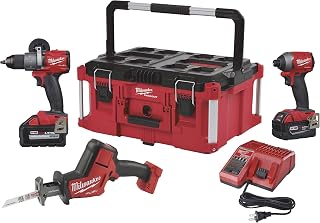


A Milwaukee power tool combo kit can be a practical way to build a compatible cordless toolkit, but the number of tools included is only one part of the buying decision. A kit that looks impressive on paper may contain tools you rarely use, while a smaller combination built around the right battery platform can be considerably more useful for everyday work. When comparing Milwaukee combo kits in the UK, look beyond the headline tool count. Consider the battery platform, included battery capacities, charger type, individual tool specifications, intended workload, storage solution, ergonomics and the availability of additional tools that use the same batteries. The best option is therefore not necessarily the kit with the most pieces. It is the combination that gives you the right core tools without paying for equipment that does not match your type of work. Before comparing individual kits, establish which Milwaukee cordless platform suits your work. Milwaukee's M12 and M18 systems are designed around different size, power and application requirements, so choosing the platform first can make later purchasing decisions much easier. M12 tools are compact and particularly useful where access, low weight and manoeuvrability matter. They can be attractive for installation work, light-duty maintenance, electrical work, plumbing tasks, cabinetry and other applications where a full-size drill or impact driver would be unnecessarily bulky. The smaller format can also reduce fatigue when a tool is used repeatedly above shoulder height or in confined spaces. However, buyers should not automatically assume that a compact platform is suitable for every demanding application. Check the specification of the individual tool and compare its intended use with your workload. M18 is the more substantial cordless platform and is generally the more natural starting point for buyers who need a broad collection of full-size power tools. M18 kits can cover applications ranging from drilling and fastening to cutting, grinding, reciprocating sawing and other demanding site tasks, depending on the tools included. The larger batteries and tools can add weight compared with compact alternatives. In return, the platform provides a wider choice of equipment for users who need a general-purpose professional cordless system. Neither platform is universally better. The correct choice depends on the work you actually perform. Combo kits can contain very different tool combinations, so a five-tool kit is not automatically better value than a three-tool kit. The usefulness of each individual tool matters more than the number printed on the box. A drill driver is one of the most versatile tools in a cordless collection. It can handle drilling and screwdriving duties across a wide range of applications when fitted with the appropriate bit or accessory. When comparing drill drivers, consider maximum torque, speed ranges, chuck design, physical size, weight and the degree of control offered at lower speeds. A compact drill can be easier to handle for installation work, while a more powerful model may be preferable for larger holes and demanding fastening tasks. An impact driver is particularly useful for repetitive screwdriving and fastening. Its impact mechanism is designed to deliver high rotational force while reducing some of the twisting sensation associated with using a conventional drill driver for heavy fastening. For buying decisions, look at speed and torque control, overall length, weight, trigger response and available operating modes. More power is not automatically advantageous for delicate materials, so variable control can be just as important as maximum output. A combi drill adds hammer-drilling capability to conventional drilling and screwdriving functions. This can make it a useful general-purpose choice for users who occasionally need to drill into masonry without buying a separate dedicated drill immediately. For regular heavy masonry work, however, compare the kit's combi drill with the capabilities of an SDS-plus rotary hammer. The latter is designed specifically around drilling in masonry and concrete and can be a substantially more appropriate tool for repeated work of that type. A reciprocating saw can be valuable for demolition, cutting timber, plastic, metal and other materials when the appropriate blade is selected. It is particularly useful where speed and access matter more than producing a highly finished cut. When comparing reciprocating saws, examine stroke length, strokes per minute, variable-speed control, blade-changing mechanism, shoe design, vibration characteristics and overall weight. A circular saw is a more specialised addition but can dramatically increase the usefulness of a kit for carpentry and construction work. Blade diameter and cutting depth should be checked carefully because these determine what material thicknesses can be cut in a single pass. Also consider whether the saw is designed primarily for general construction cutting or whether its configuration is better suited to more precise woodworking applications. An angle grinder adds cutting, grinding and preparation capabilities to a cordless toolkit. Because grinder applications can be demanding, battery capacity, thermal management, guarding, disc compatibility and ergonomic handling deserve particular attention. Users should also account for the fact that grinding and cutting can consume considerably more battery energy than light drilling or fastening. An impact wrench is a useful addition for automotive, mechanical and heavy fastening applications. It should not be confused with an impact driver: the two tools use different interfaces and are designed around different fastening requirements. When comparing impact wrenches, consider the drive size, fastening capability, speed and torque settings, physical dimensions and whether the tool is appropriate for the fasteners you expect to encounter. A cordless tool kit is really a combination of tools and an energy-storage system. The batteries supplied can therefore have a major effect on how useful the kit is in practice. Do not assess a kit solely by the number of batteries. Compare their capacities, physical size and intended applications. A larger-capacity battery may provide longer working time but can also make a compact tool heavier and less comfortable to use. Battery capacity affects how long a tool can operate between charges, although actual runtime varies according to the tool, material, accessory, workload and operating conditions. High-demand tools such as grinders, circular saws and reciprocating saws can place substantially greater demands on a battery than occasional screwdriving. This is why the battery combination supplied with a kit should be evaluated alongside the tools themselves. A single battery may be sufficient for a homeowner or occasional user who can work at a slower pace and recharge between tasks. Professional users may find multiple batteries considerably more practical because one battery can be charging while another remains in use. When comparing kits, ask whether the included battery allocation makes sense for the most power-hungry tool in the set. Brushless motor technology is an important specification to examine when comparing cordless power tools. Brushless motors eliminate the conventional mechanical brushes used in brushed motor designs and can offer advantages in efficiency, durability and electronic control. Milwaukee's FUEL range is widely associated with its brushless cordless tool technology, but buyers should still compare individual models rather than assuming that every FUEL tool has identical performance characteristics. A brushless tool can be particularly attractive for frequent users who expect their equipment to handle regular workloads. Occasional users may place greater emphasis on price, ergonomics and the exact functionality they need. FUEL is a significant part of Milwaukee's cordless range, but it should not be treated as a substitute for reading the actual specification. Different tools have different motors, electronic controls, physical designs and intended applications. When comparing a FUEL combo kit, inspect each individual tool. A kit containing several FUEL tools may be appealing for demanding users, but the value depends on whether those particular tools match your requirements. A useful comparison should evaluate the whole package rather than simply counting tools. Write down every tool included and mark how frequently you expect to use it. A kit containing three tools that you use every week can be more valuable than a larger kit containing several tools that remain in storage. Check exactly which batteries are supplied and how many are included. Consider whether the batteries are appropriate for the highest-demand tools in the kit. The charger supplied with a kit affects how quickly you can return batteries to service. Check whether the package includes a standard charger or a faster charging solution where relevant. Milwaukee has developed numerous generations and variants of cordless tools. Two kits can appear similar while containing different generations of equipment. Check the exact model numbers rather than relying solely on photographs or marketing descriptions. Storage can be overlooked when buyers concentrate on tool specifications. A kit supplied with a suitable case or modular storage solution may be easier to organise, transport and protect than an otherwise similar collection supplied with minimal storage. Check whether bits, blades, discs or other accessories are supplied. Accessories can affect how quickly a new kit becomes usable, but do not assign excessive value to accessories you would replace with specialist alternatives anyway. Consider what the equivalent tools, batteries and charger would cost if purchased separately. This does not mean a kit must always be cheaper in simple arithmetic terms, because convenience and included equipment also have value, but it provides a useful benchmark. A DIY user normally benefits from versatility rather than maximum output. A practical starting combination may include a drill or combi drill, an impact driver and batteries suitable for the expected workload. Before selecting a larger kit, consider whether you genuinely need specialist tools such as a reciprocating saw, grinder or impact wrench. Buying a smaller kit and adding individual tools later can sometimes make more sense. Tradespeople should prioritise the tools used most frequently during the working week. A plumber, electrician, carpenter, installer and general builder may all benefit from very different combinations. Think about the tasks that consume the most time rather than simply choosing the largest package. Ergonomics, battery rotation, tool availability and compatibility with existing equipment can all influence the practical value of a kit. Construction users often require a more substantial cordless system capable of covering drilling, fastening, cutting and demolition tasks. In this situation, the M18 platform can provide a logical foundation for a broader tool collection. Battery management becomes particularly important on active sites. Multiple batteries, suitable charging arrangements and durable storage can be as relevant to productivity as the specifications of the tools themselves. Automotive users should pay particular attention to impact wrenches, ratchets, inspection lighting and compact fastening tools. A conventional drill-focused combo kit may contain several useful tools while still failing to provide the specialist equipment that automotive work demands. Check drive sizes and fastening requirements carefully before selecting an impact wrench. Tool count is an easy comparison point but not necessarily the most useful one. An unused tool does not improve the value of a kit simply because it increases the number printed on the packaging. Two kits can contain similar tools while supplying very different battery combinations. Always inspect the batteries rather than assuming that a larger kit automatically includes the most suitable power source. Choosing M12 when your work requires frequent heavy-duty M18 equipment can create unnecessary limitations. Conversely, choosing larger equipment for tasks that primarily require compact access can introduce unnecessary weight. Maximum torque is useful for comparisons, but it does not describe every aspect of a tool's performance. Speed control, ergonomics, operating modes, trigger response, chuck or drive design and weight can have a major impact on everyday usability. A powerful tool can still be the wrong choice if it is too long, heavy or bulky for the spaces in which you work. Compact dimensions can be especially important for cabinet installation, electrical work, plumbing and overhead applications. Battery-platform compatibility should always be checked at the model level. Do not assume that all Milwaukee cordless products use the same batteries simply because they carry the Milwaukee name. A combo kit is often the beginning of a cordless ecosystem rather than the end of the purchasing journey. Before committing to a platform, consider which additional tools you may need over the next several years. Milwaukee is not the only established professional cordless-tool brand available in the UK. Buyers may also compare systems from DeWalt, Makita and Bosch Professional. The most useful comparison is not which brand is universally best, but which ecosystem provides the tools, batteries and specifications that suit your work. Milwaukee is particularly prominent in professional cordless tools and offers extensive M12 and M18 ecosystems. It is worth considering when you want to build a broad battery-powered toolkit around a recognised professional platform. DeWalt's cordless systems provide another major option for UK tradespeople and DIY users. Buyers comparing DeWalt with Milwaukee should compare individual tool specifications, battery systems, ergonomics and the availability of the specialist equipment they expect to purchase. Makita has a long-established cordless range and a broad selection of tools. Its systems are another strong alternative when evaluating battery compatibility, tool selection and ergonomics. Bosch Professional offers a separate professional-oriented cordless ecosystem. Buyers should distinguish between professional and consumer-oriented Bosch ranges when comparing specifications and battery compatibility. Brand loyalty can be useful once you have already invested in batteries, but a first-time buyer should compare ecosystems objectively. Look at the exact tools available, battery options, charger arrangements, physical ergonomics, storage and the applications you expect to cover. A proper specification comparison should include more than headline power figures. Specifications can make a product comparison look objective, but comfort and handling can have an equally important effect on practical use. Consider the position of the handle, trigger accessibility, balance between the motor and battery, grip shape, tool length and weight. These factors become increasingly important when a tool is used for long periods or in awkward positions. A heavier tool may be perfectly reasonable for occasional high-load work but less suitable for repetitive overhead installation. Likewise, an extremely compact tool may be preferable for access work even if a larger model offers greater maximum output. Once several cordless tools share a battery platform, battery management becomes part of the overall buying decision. Keep batteries charged according to the manufacturer's instructions and avoid choosing a battery solely because it has the highest possible capacity. The best battery for a particular job is the one that provides an appropriate balance of runtime, output, weight and handling. It can also be useful to reserve higher-capacity batteries for tools that place greater demands on the battery and use lighter packs for compact tools where weight is more noticeable. Remove dust and debris after use, particularly around ventilation openings, moving components and battery interfaces. Follow the manufacturer's cleaning instructions and avoid methods that could force moisture or debris into electrical components. Drill bits, saw blades, grinder discs and other accessories directly affect tool performance. Damaged, worn or unsuitable accessories can reduce cutting or drilling efficiency and may increase the load placed on the tool. Inspect batteries for visible damage and follow the manufacturer's instructions for charging, storage and transport. Do not use a battery that appears damaged or behaves abnormally. Regularly inspect chucks, blade mechanisms, guards, shoes, drive interfaces and other moving or protective components. If something appears loose, damaged or defective, stop using the tool and follow the manufacturer's service guidance. Buying a professional-grade tool does not remove the need for safe working practices. Select accessories appropriate for the material and tool, wear suitable personal protective equipment and follow the manufacturer's operating instructions. For cutting, grinding and demolition work, eye protection and appropriate protective equipment are particularly important. Noise, dust, flying particles and sharp debris should all be considered when planning a task. Always use guards and protective features as intended. Never modify a tool's safety equipment simply to make a particular task more convenient. The cheapest kit is not necessarily the best value, and the most expensive package is not necessarily the best choice. Value should be assessed against your actual requirements. A useful approach is to separate the kit into four categories: tools you definitely need, tools you would probably use, tools you might eventually use and tools you do not need. This quickly reveals whether the larger package genuinely adds value. Also consider the cost of building the same system gradually. If you already own compatible batteries and chargers, buying a kit containing additional batteries may be less attractive than purchasing a bare tool, subject to the options available at the time. Combo kits are most compelling when several included tools are already on your shopping list. They can simplify the process of building a compatible collection and may package the batteries and charger needed to operate the tools. Buying separately can be more appropriate when you only need one specialist tool or when you already have batteries from the same platform. It also gives you greater freedom to choose different tool variants according to your individual requirements. Before deciding, compare the total specification of the complete kit with the combined specification of the individual tools you actually need. Not necessarily. If your regular work involves drilling, fastening and occasional cutting, a smaller combination may be sufficient. A larger kit becomes more compelling when you regularly use the additional specialist tools. Base the decision on the applications you perform most often. M12 prioritises compactness, while M18 provides a larger full-size platform for a broader range of demanding applications. For frequent users, brushless technology can be an attractive feature because of its efficiency, electronic control and potential durability advantages. The exact tool specification should still be examined before making a decision. Only if you have a genuine use for the additional tools. Tool count should be treated as a comparison point rather than a definition of quality. Extra batteries can be useful if several tools are used continuously or if charging time would otherwise interrupt your work. Choose capacities appropriate to the tools and workload rather than automatically buying the largest available battery. The strongest long-term buying strategy is to think in terms of a cordless ecosystem rather than a single purchase. Start with the tools that solve your immediate problems, then consider which additional products you are likely to add later. For example, a buyer starting with a drill and impact driver may later want a circular saw, reciprocating saw, grinder, lighting product or specialist trade tool. If those future purchases use the same battery system, the original investment becomes more useful over time. This approach also reduces the temptation to select a kit simply because it contains more equipment. Every tool should have a clear purpose within your working setup. There is no single kit that is best for every buyer. The most suitable option depends on the tools required, battery platform, workload, budget, ergonomics and plans for expanding the cordless system. Many Milwaukee cordless tools are positioned within professional tool ranges, but suitability depends on the exact model and application. Always compare the specification of the individual tools with the demands of your work. M18 is not automatically better. M18 is generally the more substantial platform, whereas M12 is valuable when compact dimensions and low weight are priorities. Your application should determine the choice. No. M12 and M18 are separate battery platforms. Check compatibility for the exact tool and battery before purchasing. FUEL models are worth considering when you want the features and performance characteristics associated with Milwaukee's higher-specification cordless range. Compare each model individually rather than treating the FUEL name alone as a reason to buy. It depends on the contents. If you already have enough compatible batteries and a charger, a bare-tool purchase may sometimes be more efficient. Compare the complete kit with the equivalent individual tools before deciding. Consider torque, speed range, chuck design, size, weight, control, battery compatibility and the materials you expect to drill. For regular masonry drilling, also consider whether a dedicated SDS-plus tool would be more appropriate. Look at torque, speed, impact rate, control modes, overall length, weight and trigger response. The right combination depends on the fasteners and materials involved in your work. No. An impact driver is primarily designed for driving screws and smaller fasteners using a suitable driver interface, whereas an impact wrench is intended for heavier fastening applications and uses a square drive for compatible sockets. Many cordless tools are designed for demanding construction applications, but suitability depends on the individual tool, battery, accessory and task. Match the specification to the workload rather than judging capability from the brand name alone. There is no universal number. Occasional users may manage with fewer batteries, while frequent users of several high-demand tools may benefit from a larger battery rotation. Consider which tools will be used continuously and how quickly batteries can be recharged. Not automatically. Larger batteries can provide greater capacity but also add weight. For compact installation tools, a smaller battery can provide a better balance, while high-demand saws and grinders may benefit from higher-capacity options. Maintenance requirements depend on use and the manufacturer's instructions. Inspect tools regularly, keep them clean, check accessories and examine batteries for visible damage. Frequent professional use warrants more regular inspection than occasional DIY work. The best Milwaukee power tool combo kit is the one that fits your work rather than the one with the longest feature list. Start with the battery platform, identify the tools you genuinely need and then compare batteries, chargers, specifications, ergonomics, storage and long-term expansion potential. For a first purchase, prioritise the tools you will use repeatedly. For an established Milwaukee user, pay particular attention to battery compatibility and whether the kit duplicates equipment you already own. For professional users, evaluate the complete working system, including battery rotation, tool weight, specialist applications and service considerations. Before buying, compare the exact model numbers and specifications, read verified customer reviews, check current prices from trusted UK retailers and review the manufacturer's current information. Taking these steps makes it easier to distinguish a genuinely useful Milwaukee combo kit from a package that simply looks attractive because it contains more tools.How to Choose the Right Milwaukee Power Tool Combo Kit
Milwaukee M12 vs M18: The Most Important Decision
Milwaukee M12 Kits
Milwaukee M18 Kits
Which Platform Is Better?
What Should Be Included in a Milwaukee Combo Kit?
Drill Driver
Impact Driver
Combi Drill
Reciprocating Saw
Circular Saw
Angle Grinder
Impact Wrench
Battery Size Matters More Than Many Buyers Expect
Why Battery Capacity Is Important
One Battery or Several?
Brushless vs Brushed Milwaukee Tools
Milwaukee FUEL Tools: What the Name Means for Buyers
How to Compare Milwaukee Combo Kits Properly
1. Compare the Core Tools
2. Compare Battery Capacity
3. Compare Chargers
4. Compare Tool Generation
5. Compare Storage
6. Compare Included Accessories
7. Compare the Individual Purchase Cost
Milwaukee Combo Kit Buying Guide for Different Users
For DIY and Home Improvement
For Tradespeople
For Construction and Site Work
For Automotive and Mechanical Work
Common Mistakes When Buying Milwaukee Combo Kits
Choosing the Kit With the Most Tools
Ignoring Battery Specifications
Buying the Wrong Platform
Focusing Only on Maximum Torque
Ignoring Tool Dimensions
Assuming Every Battery Fits Every Milwaukee Tool
Buying a Kit Without Considering Future Tools
Milwaukee vs DeWalt vs Makita vs Bosch Professional
Milwaukee
DeWalt
Makita
Bosch Professional
Which Brand Should You Choose?
Specifications Worth Checking Before Purchase
Why Tool Ergonomics Deserve More Attention
Battery Management for a Multi-Tool Kit
How to Maintain Milwaukee Cordless Tools
Keep Tools Clean
Inspect Accessories
Look After Batteries
Check Moving Components
Safety Considerations When Using Cordless Power Tools
How to Judge Value When Comparing Milwaukee Kits
Kit vs Buying Tools Separately
What to Check Before Ordering a Milwaukee Combo Kit in the UK
Questions to Ask Before Choosing a Kit
Do I Need a Large Combo Kit?
Should I Buy M12 or M18?
Are Brushless Tools Worth Choosing?
Is a Five-Tool Kit Better Than a Three-Tool Kit?
Should I Buy Extra Batteries?
Best Milwaukee Combo Kit Strategy for Long-Term Ownership
Milwaukee Combo Kit Comparison Checklist
Frequently Asked Questions About Milwaukee Power Tool Combo Kits
What is the best Milwaukee power tool combo kit?
Are Milwaukee combo kits suitable for professional use?
Is Milwaukee M18 better than M12?
Do Milwaukee M12 and M18 batteries interchange?
Are Milwaukee FUEL tools worth considering?
Should I buy a combo kit if I already own Milwaukee batteries?
What should I look for in a Milwaukee drill?
What should I look for in a Milwaukee impact driver?
Is a Milwaukee impact driver the same as an impact wrench?
Are cordless Milwaukee tools powerful enough for construction?
How many batteries should a Milwaukee combo kit have?
Should I choose the biggest battery available?
How often should Milwaukee cordless tools be maintained?
Final Buying Advice