

Our experts reviewed the latest {category_name } to help you compare quality, performance, durability and overall value before making your purchase.


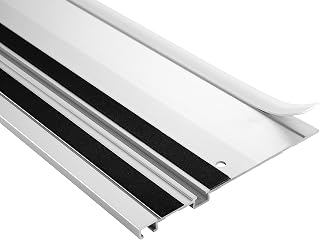


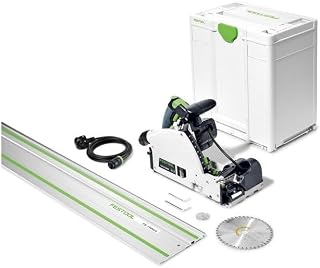
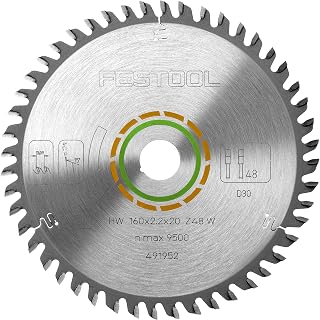


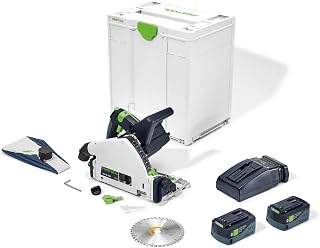


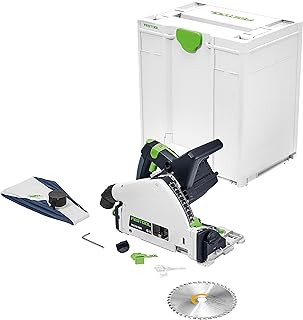
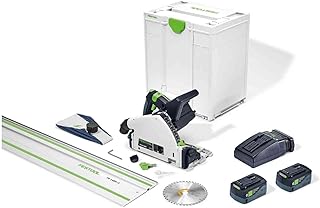

Choosing a Festool cordless plunge saw is less about finding a single universally “best” machine and more about matching cutting depth, battery configuration, guide-rail requirements, blade technology, dust management and handling characteristics to the work you actually undertake. A professional joiner cutting sheet materials every day has different priorities from a kitchen fitter making occasional worktop cut-outs, while a site carpenter may place greater value on cordless convenience and rapid set-up. The current Festool cordless plunge-saw family includes models designed around a 55 mm cutting depth, with differences in battery architecture, safety technology, blade design, supplied accessories and intended workflow. Festool's current product information identifies the TSC 55 KS as its mobile cordless option, while the wider plunge-saw range also includes mains-powered TS models for buyers who do not require battery operation. Before comparing individual model numbers, establish what the saw needs to do. A premium cordless plunge saw can be excellent value for a tradesperson who uses it frequently, yet unnecessary for someone making only a handful of cuts each month. The most useful comparison is therefore based on workflow rather than headline specifications alone. Model naming is particularly important when comparing Festool cordless plunge saws because apparently similar products can differ substantially in battery arrangement, blade configuration and supplied accessories. The TSC 55 KEB, for example, is listed by Festool with a 160 mm blade, a 0–55 mm cutting-depth range and a -1° to 47° angular range. Its published technical data also specifies a 27/36 mm dust-extraction connection and a tool weight of 3.60 kg without accessories. The newer TSC 55 KS generation takes a different approach. Festool lists the TSC 55 KSEB with a single 18 V battery specification, a 160 mm blade, 0–55 mm cutting depth and 3,500–5,200 rpm idle speed. The published tool-only weight is 3.30 kg for the basic version. That distinction matters when comparing cordless plunge saws. Do not assume that every TSC 55 designation represents the same configuration. Check the exact article number, battery arrangement, included blade, Systainer, guide rail and charging equipment before deciding which listing represents the better overall purchase. Battery architecture affects more than runtime. It can influence tool balance, overall weight, the number of batteries that need to be kept charged and the way the saw fits into an existing cordless-tool system. For someone already invested in compatible Festool batteries, a bare-tool purchase can make more sense than a complete kit. Conversely, a first-time buyer may need to account for batteries and a charger when comparing the real cost of different packages. Older TSC 55 documentation describes a dual-battery system capable of 18 V or 36 V operation, illustrating why model generation and exact specification should always be checked rather than relying on the general TSC 55 name. Maximum cutting depth is one of the first specifications buyers notice, but it should not be considered in isolation. A stated 55 mm cutting depth generally refers to a particular cutting configuration rather than every possible angle and material combination. For the current TSC 55 cordless models, Festool specifies a maximum cutting depth of 55 mm and a 45° cutting depth of 43 mm. The angular adjustment range is listed as -1° to 47°. This makes the saw well suited to many sheet-material applications, including trimming doors, cutting panels and making recesses. Festool also identifies applications such as cutting chipboard, producing parquet expansion joints and cutting recesses in doors and kitchen worktops. If your work regularly involves substantially thicker timber, structural sections or unusually deep cuts, a 55 mm cordless plunge saw may not be the most appropriate tool. Festool's own range includes the TS 60 K with a 60 mm cutting depth and the TS 75 with a 75 mm cutting depth, showing why application should determine model choice rather than the cordless label alone. A plunge saw should be evaluated as part of a cutting system rather than as an isolated power tool. The guide rail is central to repeatable straight cuts, especially when breaking down large sheets, trimming doors or producing long finished edges. When comparing a saw package, determine whether a guide rail is included. Festool sells versions of the TSC 55 KSEB with guide-rail packages, while basic versions can have a different scope of delivery. The correct rail length depends on the material and work area. A shorter rail is easier to transport and convenient for smaller components, whereas longer rails can reduce the number of repositioning operations when cutting full-size sheet goods. The saw itself is only one part of the cutting equation. Blade diameter, tooth geometry, kerf and material suitability can influence cut quality, feed behaviour and the type of finish achievable. Current Festool TSC 55 variants are listed with 160 mm saw blades, but the exact blade specification can differ between generations and configurations. The TSC 55 KEB Basic is listed with an HW 160x1.8x20 WD42 blade, while the TSC 55 KSEB Basic is listed with an HW 160x1.6x20 FWWW35 blade. That difference is a useful reminder to compare the actual blade supplied rather than simply comparing blade diameter. A thinner kerf may be particularly relevant to cordless operation because less material is removed with each cut, while tooth configuration should be selected according to the material and desired finish. Safety technology deserves careful consideration when comparing professional saws. Festool's TSC 55 KEB documentation describes KickbackStop as an intelligent system designed to detect dangerous kickback situations and stop the saw blade rapidly. Festool states that the technology is intended to minimise injury risk and protect the workpiece. This should be regarded as an additional safety feature, not a replacement for correct technique. Users still need to follow the operating instructions, use appropriate personal protective equipment, support the work correctly, maintain the blade and guide rail, and avoid cutting situations outside the tool's intended application. Buyers should also distinguish between a feature being present on a particular model generation and assuming that every Festool saw with a similar name has exactly the same safety equipment. Verify the specification of the precise model being considered. Dust management is an important consideration for anyone using a plunge saw indoors, in a workshop or during installation work. Festool lists 27/36 mm extraction connections on the current TSC 55 cordless models, allowing buyers to assess compatibility with their extraction setup before purchasing. Effective extraction can help reduce airborne dust and make the cutting area easier to inspect. It can also be valuable when following a cut line precisely, because excessive debris can obstruct visibility around the blade and guide-rail area. When comparing packages, consider the complete dust-management system rather than the saw connection alone. A suitable extractor, hose arrangement and correctly maintained filters can be just as relevant to day-to-day usability as the specification printed on the saw. Tool weight is easy to compare but surprisingly easy to misunderstand. Festool lists the TSC 55 KEB at 3.60 kg without accessories, while the TSC 55 KSEB Basic is listed at 3.30 kg without accessories. In real use, however, the weight carried and controlled by the operator includes the battery or batteries and can also be influenced by the guide rail, extraction hose and workpiece position. A small difference in bare-tool weight can therefore be less important than balance and how the complete setup feels during long cuts. For frequent overhead, awkward-position or installation work, handling deserves more attention than a simple “lightest wins” comparison. For bench-based sheet cutting, stability and controlled movement may matter more than saving a few hundred grams. Battery runtime is one of the most difficult cordless-tool characteristics to reduce to a single useful number. Cutting depth, material density, blade condition, feed rate, blade selection, battery capacity and ambient conditions can all influence how much work can be completed on one charge. Rather than relying on an advertised runtime figure without context, consider your normal workload. A professional who makes repeated long cuts may benefit from carrying charged spare batteries, whereas someone making short installation cuts may prioritise low weight and fast setup. The decision between cordless and mains power is primarily a workflow decision. Cordless operation removes the power cable from the cutting area and can be particularly convenient for site work, installations and locations where access to a suitable socket is inconvenient. A mains-powered plunge saw can remain attractive for fixed workshop environments where uninterrupted operation is more important than mobility. Festool's current range positions the TS 55 as a mains-powered option alongside the cordless TSC 55 KS, while the TS 60 K and TS 75 offer greater cutting capacities for applications that demand them. For a buyer deciding between these approaches, the key question is not whether cordless is inherently better. Ask whether removing the cable improves your working process enough to justify the battery investment. The TSC 55 KS and TS 55 are natural comparison points because both are associated with the 55 mm cutting-depth class, but they serve different power-system preferences. Festool describes the TSC 55 KS as its mobile cordless plunge-cut saw, while the TS 55 is presented as the solid mains-powered option. The TS 60 K is particularly relevant when the buyer wants more cutting flexibility rather than simply cordless operation. Festool describes it as an all-rounder with a 60 mm cutting depth and KickbackStop, whereas the TSC 55 KS is positioned as the mobile cordless option with a 55 mm cutting depth. This comparison illustrates an important buying principle: do not pay a premium for cordless convenience if your work consistently demands capabilities that point towards a different saw class. Conversely, do not buy a larger mains-powered model if mobility is central to the work. The TS 75 belongs to a different capacity category. Festool lists it with a 75 mm cutting depth and describes it as the option for extra-thick wood and other thick materials. For most panel-focused users, a larger cutting-depth capability does not automatically translate into better value. A bigger saw can make less sense if the additional capacity is rarely required. Buyers should identify the thickest material they routinely cut and select the smallest suitable machine that comfortably handles the workload. Festool should also be compared with other established professional-tool manufacturers rather than evaluated in isolation. Makita, Bosch and DeWalt all have significant cordless woodworking-tool ecosystems, so brand choice can influence battery compatibility, accessory availability and the number of tools that can share a common platform. The strongest comparison is specification against specification rather than brand against brand. Look at cutting capacity, guide-rail compatibility, battery requirements, tool weight, blade availability, extraction options, included accessories and the quality of the service ecosystem available to you. The most economical brand is therefore not necessarily the one with the lowest individual saw price. If batteries, chargers, rails and extraction equipment already exist within one ecosystem, switching platforms can introduce additional costs that are easy to overlook. Package contents can have a major effect on value. Festool listings demonstrate that different TSC 55 configurations can include different combinations of saw blade, splinter guard, chip collection bag, hex key, Systainer, batteries, charger and guide rail. Before buying, make a simple inventory of what you already own and what you still need. A bare-tool listing can look substantially cheaper until the cost of batteries, charging equipment and a suitable guide rail is added. Conversely, a complete kit may be unnecessary for someone who already owns the required cordless equipment. The cheapest listing is not necessarily the lowest-cost solution. Compare what is included, what accessories are required and whether the tool has the cutting capacity needed for the intended work. Similar TSC 55 names can represent different generations and configurations. Check the exact article number and manufacturer's technical information before comparing two listings. A plunge saw without the appropriate rail may not deliver the workflow the buyer had in mind. Treat the saw and rail as a system. A premium saw fitted with an unsuitable blade can produce disappointing results. Blade tooth design, kerf and material suitability all matter. A cordless bare tool is only one part of the purchase if you do not already own compatible batteries and charging equipment. A larger or more powerful saw is not automatically the best option. If nearly all your work involves standard sheet materials, additional cutting depth may offer little practical benefit. Features such as KickbackStop can provide an additional layer of protection, but they do not remove the need for correct setup, secure workpiece support and compliance with the manufacturer's instructions. For a meaningful comparison, score each candidate against the same criteria rather than allowing one impressive specification to dominate the decision. A cordless plunge saw is particularly useful where accurate, guided cuts are required without the restrictions of a mains cable. Festool identifies applications including trimming interior doors, cutting recesses in doors and kitchen worktops, working with chipboard and producing expansion joints in parquet flooring. Kitchen work often involves accurate panel cuts, controlled recesses and installation in environments where cables can become inconvenient. A cordless setup can simplify movement between rooms and reduce the need to locate suitable power sockets. For furniture and cabinet components, consistency is often more important than raw cutting speed. A guide rail, suitable blade and properly supported workpiece can form a repeatable cutting system for sheet materials. Door trimming is one of the applications specifically identified by Festool for its cordless TSC 55 models. The combination of plunge capability and guide-rail control can be useful when a straight, controlled cut is required. For mobile tradespeople, cordless operation can simplify setup and reduce cable management. The value is greatest when the saw is used frequently enough for battery ownership and charging logistics to become part of an efficient daily workflow. Regular maintenance is important for preserving cutting performance and safe operation. A plunge saw is a precision tool, so contamination, damaged components or a poorly maintained blade can affect both accuracy and usability. Clean cutting is influenced by more than the quality of the saw. Blade condition, blade selection, rail positioning, workpiece support and cutting technique all contribute to the finished edge. A bare tool is generally worth considering when you already own compatible batteries, charging equipment and the necessary accessories. This approach avoids duplicating equipment you already have. A complete kit can be more convenient for a new user because the purchase may combine the saw with batteries, charger, guide rail and storage. However, the exact scope of delivery varies by model and package, so buyers should read the individual specification rather than assuming every kit contains the same equipment. For professional tools, value should be assessed over the expected working life rather than by the initial purchase figure alone. A reliable system that integrates with existing batteries, rails, extractors and storage can be more practical than a cheaper standalone tool that requires a completely different accessory ecosystem. When comparing today's listings, consider the total cost of ownership: saw, batteries, charger, guide rail, blades, extraction accessories and replacement consumables. Then consider how frequently the equipment will be used. A high-specification professional tool may make financial sense for daily trade use but be difficult to justify for occasional DIY projects. There is no single best choice for every buyer. The current TSC 55 KS family is aimed at users who want a mobile cordless plunge-saw system, while other Festool models are better suited to buyers who need mains operation or greater cutting capacity. The right choice depends on material thickness, battery requirements, guide-rail use and the type of work being undertaken. Festool positions its TSC 55 cordless plunge-cut saws for professional applications including door trimming, kitchen worktop recesses, panel cutting and parquet work. The precise suitability depends on the workload, materials and selected configuration. Current TSC 55 KEB and TSC 55 KSEB specifications list a maximum cutting depth of 55 mm and a 45° cutting depth of 43 mm. Current TSC 55 cordless variants use a 160 mm saw blade. The exact supplied blade specification can differ between model generations and packages, so buyers should check the individual product listing. This depends on the specific generation and model. Current TSC 55 KSEB specifications list an 18 V battery arrangement, while earlier TSC 55 documentation describes a system capable of operating at 18 V or 36 V using its battery configuration. Always verify the exact model number and current technical specification before purchasing. Festool lists KickbackStop technology on its TSC 55 KEB and TSC 55 KS cordless plunge-saw models. The system is designed to detect dangerous kickback situations and rapidly stop the blade. It depends on the package. Festool offers basic configurations as well as versions supplied with guide rails, so buyers should compare the exact scope of delivery and not assume that every TSC 55 listing includes a rail. Yes, Festool specifically identifies cutting recesses in kitchen worktops among the main applications for its TSC 55 cordless plunge-cut saws. The material, blade, cutting depth and required cut must remain within the tool's specifications. It can be, particularly for demanding DIY users who value guided cutting, cordless mobility and a professional accessory ecosystem. However, occasional users should compare the complete cost of the saw, batteries, charger, guide rail and blades against less expensive alternatives before committing to a premium professional system. A plunge saw is designed around controlled entry into the workpiece and guided cutting, making it particularly useful where the starting point of the cut matters. A conventional circular saw may be more appropriate for straightforward rough cutting, but the two tools should not be judged solely by motor power or blade diameter. Check the exact model number, current technical specification, battery configuration, supplied blade, guide-rail inclusion, battery and charger inclusion, storage system and retailer information. Also compare verified customer feedback and the complete cost of the accessories required for your intended workflow. The best Festool cordless plunge saw is the one that fits the complete working system rather than the one with the most impressive specification on paper. Start with the materials and maximum cutting depth you actually need, then evaluate cordless requirements, guide rails, blade choice, extraction, safety features, weight and package contents. For many professional users, the TSC 55 family is compelling because it combines plunge-saw functionality with cordless mobility and a 55 mm cutting-depth class. Festool's current information also shows that the TSC 55 range has evolved, making exact model identification particularly important when comparing specifications or listings. Before purchasing, compare the exact specifications of the model you are considering, inspect the full scope of delivery, check compatibility with your existing batteries and guide rails, and consider the cost of the complete setup rather than the headline tool price. For alternatives, compare the relevant Festool TS models alongside professional cordless systems from manufacturers such as Makita, Bosch and DeWalt, using cutting capacity, system compatibility and intended workload as the primary criteria. Finally, treat current product information as model-specific. Specifications, kit contents and available configurations can change, so the manufacturer's information for the precise article number should take precedence over generic descriptions of the TSC 55 family.Festool Cordless Plunge Saw Buying Guide: What to Look For in 2026
How to Choose the Right Festool Cordless Plunge Saw
Festool TSC 55 KS and TSC 55 KEB: Understanding the Difference
Why the Battery Configuration Matters
Cutting Depth: 55 mm Is Not the Whole Story
When 55 mm Is Enough
When You May Need More Cutting Capacity
Guide Rails: One of the Most Important Parts of the System
Guide-Rail Buying Mistakes to Avoid
Saw Blades: The Specification That Can Change the Result
Blade Selection by Application
KickbackStop and Safety Features
Dust Extraction and Workshop Cleanliness
Weight and Handling: Compare the Complete Setup
Battery Runtime: What Buyers Should Actually Compare
Festool Cordless Plunge Saw vs Mains-Powered Plunge Saw
Festool TSC 55 KS vs Festool TS 55
Festool TSC 55 KS vs TS 60 K
Festool TSC 55 KS vs Festool TS 75
Festool vs Makita, Bosch and DeWalt Cordless Plunge Saws
What Should Be Included in a Festool Cordless Plunge Saw Kit?
Common Buying Mistakes When Choosing a Cordless Plunge Saw
Mistake 1: Comparing Price Before Specification
Mistake 2: Ignoring the Exact Model Number
Mistake 3: Forgetting the Guide Rail
Mistake 4: Buying the Wrong Blade
Mistake 5: Overlooking Battery Costs
Mistake 6: Buying More Cutting Capacity Than Necessary
Mistake 7: Treating Safety Technology as a Substitute for Technique
How to Compare Festool Cordless Plunge Saws Properly
Professional Applications for a Festool Cordless Plunge Saw
Kitchen Fitting
Joinery and Furniture Work
Door Trimming
Site Carpentry
Maintenance and Care for a Festool Cordless Plunge Saw
How to Get Cleaner Cuts From a Plunge Saw
Should You Buy a Bare Tool or a Complete Kit?
How to Assess Value Without Focusing Only on Price
Questions to Ask Before Buying
Festool Cordless Plunge Saw FAQ
Which Festool cordless plunge saw is best?
Is the Festool TSC 55 cordless plunge saw suitable for professional use?
What is the cutting depth of the Festool TSC 55?
What blade size does the Festool TSC 55 use?
Does the Festool TSC 55 use one or two batteries?
Does the Festool TSC 55 have KickbackStop?
Is a guide rail included?
Can a Festool cordless plunge saw be used for kitchen worktops?
Is a Festool cordless plunge saw worth buying for DIY?
How does the TSC 55 compare with a standard circular saw?
What should I check before buying a Festool plunge saw online?
Final Festool Cordless Plunge Saw Buying Advice