

Our experts reviewed the latest {category_name } to help you compare quality, performance, durability and overall value before making your purchase.


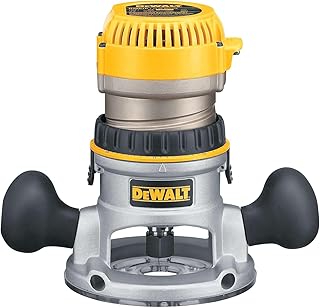


Choosing a DEWALT cordless router is less about finding the model with the highest headline specification and more about matching the router's design, collet capacity, base configuration, battery system and adjustment controls to the work you actually intend to do. For UK buyers, the current DEWALT range includes compact 18V XR models alongside larger 18V plunge-routing equipment, so it is important to distinguish a compact trim router from a full-size plunge router before comparing prices or specifications. DEWALT's UK router catalogue currently lists the 18V XR Brushless DCW604 family, the DCW600 compact router and the newer DCW620 1/2-inch plunge router, as well as corded alternatives. The DCW604 is particularly versatile because its system can be configured with fixed and plunge bases, whereas the DCW600 is a more straightforward compact routing option. The DCW620 is aimed at substantially deeper and heavier plunge-routing work and accepts 1/2-inch tooling. The most useful comparison is not simply model number against model number. These routers occupy different positions within the cordless routing category. The DCW604 is an 18V XR brushless compact router designed around versatility. DEWALT states that it is compatible with its 18V XR battery system and offers variable speed, dual LED work lighting, an aluminium motor housing and fine depth adjustment. Current UK specifications identify 6.35 mm and 8 mm collet compatibility, a maximum cutter diameter of 30 mm and a no-load speed range of approximately 16,000 to 25,500 rpm, depending on the listed configuration. The major reason to investigate the DCW604 is its base system. The router body can be used with different base arrangements, making it more flexible than a compact fixed-base router when your projects involve both edge work and plunge operations. DEWALT also describes a fine-tune mechanism on the plunge base, along with a five-position adjustable turret on applicable configurations. Best suited to: furniture making, edge profiling, template routing, rebates, grooves, trimming and general workshop routing where versatility is more valuable than the capacity of a full-size 1/2-inch router. The DCW600 is another 18V XR brushless compact router. DEWALT's UK specification lists 6.35 mm and 8 mm collets, a 30 mm maximum cutter diameter, approximately 16,000 to 25,500 rpm no-load speed and a tool weight of 1.54 kg before the battery is considered. It is supplied as a compact router with a parallel fence and 8 mm collet in the listed UK configuration. The DCW600 makes most sense when your routing is predominantly edge-based or light-duty and you prefer a simpler compact-router format. Its 100 mm D-shaped base is intended to provide support on the workpiece, while the aluminium construction and integrated LED lighting are useful considerations when comparing handling and visibility. Best suited to: trimming, rounding edges, profiling, small grooves, template work and general portable woodworking where a compact palm-style router is preferable. The DCW620 represents a different class of cordless router. It is an 18V XR 1/2-inch plunge router and is designed for deeper plunge applications than the compact DCW604 and DCW600. DEWALT lists a 70 mm plunge depth, a 63 mm maximum cutter diameter and 6.35 mm and 12.7 mm collet options for the current 2 x 5 Ah kit. Its no-load speed is listed at 11,000 to 23,000 rpm. This difference in architecture matters. A larger plunge router is not automatically a better choice for every job. It can be more appropriate for substantial joinery, deeper grooves and demanding routing, but a compact router can be easier to manoeuvre for small components, edge profiling and detailed work. Best suited to: heavier woodworking, deeper routing, larger cutters, substantial joinery and applications where 1/2-inch tooling and plunge depth are important. Most of the DEWALT cordless routers considered in this comparison use the 18V XR platform. This is important because the real advantage of buying into a cordless system is not limited to the router itself. Existing batteries can potentially be shared across compatible tools, reducing the need to purchase a separate power source for every machine. DEWALT states that its DCB184 5 Ah battery is compatible with all 18V XR tools. The company lists the battery at 5 Ah and gives a weight of 0.62 kg for the battery itself. However, battery compatibility should not be confused with identical performance across every battery. The battery affects total tool weight, available runtime and how the router feels in the hand. For precision edge routing, a smaller and lighter battery may be attractive. For longer periods of demanding work, greater capacity may be more useful. Brushless motors are a key feature across the current DEWALT cordless router range. The practical benefit is not simply a marketing label. Brushless drive systems are designed without conventional motor brushes, and manufacturers commonly use the technology to improve efficiency, durability and electronic control. For a router, the more relevant buying question is how the motor system behaves under load. A high no-load rpm figure tells you how quickly the spindle can rotate without cutting material; it does not by itself tell you how effectively the machine maintains cutting performance when the cutter enters timber. Variable speed is particularly useful with routers because cutter diameter, material, cutter design and routing technique all influence the appropriate spindle speed. A small cutter can generally be operated differently from a large cutter, and material removal requirements vary considerably between edge trimming and deeper groove cutting. The DCW604 and DCW600 are listed with no-load speeds around 16,000 to 25,500 rpm, while DEWALT lists the DCW620 at 11,000 to 23,000 rpm. These figures should be interpreted in the context of cutter size and application rather than treated as a simple performance ranking. Collet compatibility is one of the most important specifications to check before buying a router. A machine that cannot accept the cutter shanks you already own can turn an apparently good purchase into an expensive change of tooling. The DCW604 and DCW600 support 6.35 mm and 8 mm tooling in the listed UK specifications, while the DCW620 offers 6.35 mm and 12.7 mm collet options. Never assume that a cutter will fit simply because the router is from the same manufacturer. Check the exact collet supplied, the supported shank diameter and the instructions for the specific model before purchasing accessories. There is no universally better base. The correct choice depends on how the router enters the workpiece. A fixed base keeps the cutter at a set height while the router is moved across or around the workpiece. This configuration is particularly convenient for edge profiling, trimming and repeated routing where the cutting depth has already been established. Fixed-base routing can also feel more predictable for beginners because the cutting depth remains constant once correctly adjusted. It is especially useful when following a workpiece edge with a bearing-guided cutter. A plunge router allows the cutter to be lowered into the workpiece after the router has been positioned. This makes it suitable for internal grooves, mortises, stopped cuts, template routing and other operations where the cutter cannot simply begin at an exposed edge. The DCW604's optional or supplied plunge configuration is one reason it stands out as a versatile compact system, while the DCW620 is designed specifically around larger plunge-router applications. When comparing routers for precision work, pay close attention to base stability, depth adjustment, visibility of the cutter, guide compatibility and the ease with which the base can be adjusted. A router with impressive power but awkward depth control may be less useful for fine furniture work than a slightly less powerful machine that is easier to set accurately. Fine adjustment is one of the most valuable features for repeatable woodworking. Small changes in depth can determine whether a joint fits correctly, whether an edge profile matches the intended design or whether a groove is too shallow or too deep. The DCW604 uses a fine adjustment arrangement on its plunge base, while the DCW620 incorporates a one-touch plunge lock and adjustable turret system designed around repeatable depth settings. Integrated LEDs are more than a convenience when routing. A router can obscure the cutting area with its body, base or hands, particularly when working close to a template. DEWALT's compact cordless models use dual LED lighting around the aluminium housing to improve visibility of the workpiece. Routing produces fine wood dust, and effective extraction can improve visibility as well as keeping the work area cleaner. The DCW604 supports DEWALT's AirLock extraction system through compatible extraction arrangements, while the DCW620 includes integrated dust-extraction features and a dust port in its listed specification. When comparing a router, look beyond whether an extraction port exists. Check whether the correct adaptor is supplied, whether your extractor can connect to it and whether the base configuration you intend to use supports extraction. Frequent cutter changes make spindle-lock design an important convenience feature. DEWALT highlights multiple spindle-lock detents on its current compact cordless routers to simplify bit changes. A convenient spindle-lock system does not eliminate the need to follow the manufacturer's instructions for securing cutters. The collet should be clean, the correct spanner should be used and the cutter should be inserted to the appropriate depth before tightening. Soft-start behaviour can make a router easier to control as the spindle accelerates. This is particularly useful when working close to an edge or when a sudden start could move the router away from the intended position. Some DCW604 configurations list soft start and electronic braking among their features. For rounding, chamfering and decorative edge profiles, a compact router is often the most convenient format. The DCW600 and DCW604 are both designed around compact routing applications and accept smaller-shank cutters suitable for many edge-profile jobs. Compact handling is particularly useful for trimming work because the router needs to follow an edge accurately without unnecessary bulk. A bearing-guided flush-trim cutter can make the process straightforward when used with suitable material and correct technique. For grooves, cutter diameter and depth adjustment become more important. A plunge base is valuable for stopped grooves, while a fixed base or guide fence can be convenient for routing from an accessible edge. Template work benefits from accurate depth adjustment, stable bases and compatible guide bushes or bearings. The DCW620 includes guide-bush centring features in its listed equipment, while the DCW604 system is designed around interchangeable base configurations and guide accessories. Joinery places greater demands on depth control and repeatability. For shallow or compact work, the DCW604 may be attractive because of its plunge-base versatility. For larger joinery requiring substantial cutter diameter, greater depth or 1/2-inch tooling, the DCW620 is the more relevant DEWALT model to investigate. Large profile cutters and substantial material removal are situations where a full-size plunge router becomes more appropriate. This is where comparing only compact cordless routers can lead to the wrong purchase. The DCW620's 1/2-inch collet capacity and 70 mm plunge depth place it in a different category from compact 8 mm routers. One of the easiest buying mistakes is comparing the price of a bare router with the price of a complete kit without accounting for what is included. DEWALT's current DCW604 listings demonstrate why configuration matters: the same underlying router family appears in tool-only and battery-inclusive formats, while some historical configurations are marked as discontinued. Always compare the exact model suffix and included equipment rather than assuming that every DCW604 package is identical. Battery capacity is normally expressed in ampere-hours (Ah). A higher Ah rating generally indicates greater stored energy, but it also needs to be considered alongside the battery's physical size and weight. For a handheld router, weight distribution matters. If you are making short edge passes, a lighter setup may feel easier to control. If you are working continuously on a larger project, additional battery capacity can reduce interruptions. DEWALT lists its 5 Ah DCB184 battery at 0.62 kg, illustrating that the battery is a meaningful part of the final handheld weight. For this reason, do not judge a cordless router's ergonomics from the tool-only specification alone. If possible, consider the weight and balance of the complete router, battery and chosen base. The DCW604 and DCW600 use aluminium in their motor housing and base construction. DEWALT presents this as part of the machines' durability and design, while the aluminium housing also provides a rigid platform around the motor and adjustment mechanism. Base rigidity is crucial because any unwanted movement between the motor, base and workpiece can affect the final cut. When comparing routers, inspect how securely the motor is clamped, how the base slides or plunges and whether the depth setting remains stable once locked. Routing requires controlled movement rather than simply holding the tool in position. Rubber overmoulds, handle position, switch placement and overall balance can therefore be more important than a small difference in quoted motor output. DEWALT lists overmoulded rubber grips on the DCW604 and DCW620, while the DCW620 uses dedicated overmoulded handles around its larger plunge-router format. DEWALT is not the only established manufacturer producing cordless routers. Makita and Bosch Professional are important alternatives to consider, particularly if you already own batteries from one of their respective cordless platforms. Bosch Professional, for example, currently lists the GKF 18V-8 cordless palm router with an 18V battery platform, variable no-load speed of 10,000 to 30,000 rpm and compatibility with 6 mm, 8 mm and 1/4-inch collets. Bosch also lists the GLF 18V-8 as an 18V cordless palm router with a brushless motor, constant-speed function and multiple dust-extraction accessories. The sensible comparison is therefore not simply “DEWALT versus Bosch” or “DEWALT versus Makita”. Compare the complete ecosystem: battery ownership, collet sizes, base options, accessories, extraction compatibility, service arrangements, case systems, ergonomics and the type of work you perform. If your workshop already contains several DEWALT 18V XR tools, staying within that platform can make practical sense. Conversely, a user already invested in another professional battery platform may find that switching systems purely for a router creates additional battery and charger expenditure. This is one of the strongest reasons to compare complete ownership cost rather than judging cordless routers on the tool price alone. A higher maximum rpm figure does not automatically make one router better. Cutter diameter, material, depth of cut and manufacturer guidance all influence the correct operating speed. Check your existing router bits before choosing a machine. If your cutter collection is predominantly 8 mm, a compact DEWALT model supporting 8 mm tooling may be more convenient than buying a router that requires you to replace or adapt your cutter collection. Compact routers are highly useful for many woodworking operations, particularly edge profiling and trimming. The mistake is expecting a compact 1/4-inch or 8 mm router to replace every function of a large 1/2-inch plunge router. The opposite mistake is buying a large plunge router for occasional edge profiling. A heavier machine can be unnecessarily cumbersome for small components and detailed work. Check exactly what is included: battery, charger, fixed base, plunge base, parallel fence, guide bush, dust adaptor, collets, spanners and storage case. Two listings with similar model names can represent materially different packages. DEWALT's UK site currently shows multiple package variants within the DCW604 family, including configurations marked as discontinued and newer tool-only or battery-inclusive listings. Model suffixes should therefore be treated as part of the product identity rather than ignored as minor catalogue details. Price comparison is most useful when performed on an equivalent specification basis. Before deciding that one router is cheaper, establish whether both listings include the same battery capacity, charger, bases and accessories. Prices and retailer packages can change, so a buying decision should always be based on the current specification and the complete contents of the particular listing being considered. The router itself is only one part of the cutting system. Cutter quality has a major influence on the finish, cutting behaviour and suitability of a job. Common router-bit categories include straight cutters, flush-trim cutters, round-over cutters, chamfer cutters, V-groove cutters, core-box cutters and pattern cutters. The correct cutter depends on the joint or profile being created. When purchasing cutters, match the shank diameter to the router's supported collet. Do not exceed the manufacturer's stated maximum cutter diameter, and never use damaged, bent or unsuitable cutters. Dust extraction deserves particular attention in a cordless-router comparison because routing can generate a substantial amount of fine dust. A router with a compatible extraction port can be much easier to use neatly, particularly when cutting grooves or working indoors. DEWALT incorporates extraction provisions into its cordless router designs, with the DCW604 described as AirLock compatible and the DCW620 supplied with extraction equipment in its current kit specification. For best results, assess the entire extraction setup rather than the router alone. The extractor, hose, adaptor, base and workpiece position all affect how effectively dust is captured. Good maintenance is especially important for routers because dust can accumulate around adjustment mechanisms and ventilation openings. Keeping the tool clean also makes it easier to identify damage or wear before it affects a project. A cordless router should be treated as a high-speed cutting machine, not simply as another battery power tool. The absence of a mains cable reduces one type of hazard but does not reduce the need for correct routing technique. Router quality is only part of the equation. Technique has a major influence on the final finish. Use a sharp cutter, secure the workpiece properly and avoid trying to remove excessive material in one pass. For deeper cuts, several controlled passes can provide better control than attempting the complete depth immediately. Pay attention to feed direction. Conventional routing and climb routing behave differently, and an unexpected feed direction can make the router harder to control. Beginners should follow the manufacturer's guidance and practise on scrap material before routing a valuable component. For repeatable work, use a fence, guide bush, template or bearing-guided cutter rather than relying solely on freehand movement. The more accurately the router is guided, the less the final result depends on hand control alone. For some users, yes; for others, no. Cordless routing is particularly attractive when portability, rapid setup and freedom from a mains cable are important. It can be convenient on installation work, in temporary workshops and wherever routing needs to be performed away from a fixed bench. A corded router can still be the more sensible choice when long periods of continuous heavy routing are expected and battery logistics offer little benefit. Corded and cordless machines should therefore be compared according to the workload rather than assuming that newer cordless technology is automatically superior. The DCW604 is particularly compelling for buyers who want a compact router but do not want to be limited to a single base arrangement. Its 18V XR compatibility, brushless motor, variable speed and interchangeable base concept make it a strong candidate for general woodworking and workshop use. It is worth prioritising if your work spans edge profiling, trimming, template routing and occasional plunge operations. The DCW600 deserves consideration if the priority is a compact, relatively lightweight 18V XR router for edge and general routing applications. Its listed 1.54 kg tool weight, 100 mm D-base and 6.35 mm/8 mm collet compatibility make its intended role clear. It is less compelling if you know from the outset that your work requires a full-size plunge router, deep plunge capacity or 1/2-inch cutters. The DCW620 is the model to investigate when the requirements move beyond compact routing. Its 12.7 mm collet option, 70 mm plunge depth, larger maximum cutter diameter and dedicated plunge-router design make it much better aligned with substantial routing tasks. It is likely to be unnecessary for someone whose routing consists almost entirely of small edge profiles and trimming, but considerably more appropriate when deep or heavy plunge work is a regular requirement. There is no single best model for every user. The DCW604 is the strongest option to investigate for versatility, the DCW600 is aimed at compact routing, and the DCW620 is the more appropriate choice for larger plunge-router applications. The DCW604 system is designed to work with plunge and fixed-base configurations in the relevant UK packages. This makes it considerably more versatile than a compact router designed solely around one base format. Yes. DEWALT's UK specification lists 6.35 mm and 8 mm collet sizes for the DCW604. Always confirm the exact collet supplied with the configuration you are buying. Yes. The current UK specification lists both 6.35 mm and 8 mm collet compatibility for the DCW600. Yes. The DCW620 is a 1/2-inch plunge router and DEWALT lists a 12.7 mm collet alongside a 6.35 mm option. The current compact DEWALT cordless routers are part of the 18V XR system, and DEWALT states that its 18V XR batteries are compatible across the 18V XR tool range. Always check the precise battery and tool model information before use. Not universally. The DCW604 is the more attractive choice when base versatility and plunge capability are priorities. The DCW600 is a sensible alternative when you mainly want a compact router for trimming, profiling and similar work. It depends on the application. The DCW620 is designed for larger plunge-routing work and supports 12.7 mm tooling, whereas the DCW604 is a compact multi-base router. They should be viewed as different classes of cordless router rather than direct substitutes. Cordless routers can be suitable for professional woodworking, but the appropriate model depends on the work. Compact cordless routers are well suited to many trimming, profiling and template operations, while heavier routing may justify a full-size plunge router such as the DCW620 or a corded alternative. A bare router can be good value if you already own compatible 18V XR batteries and a charger. If you do not, compare the complete cost of adding batteries and charging equipment against a kit containing them. It is important for both cleanliness and visibility. Effective extraction can reduce the amount of dust obscuring the cutting area and can make workshop cleanup easier. Check the exact extraction adaptor and base configuration supplied with the router rather than assuming every package includes the same equipment. There is no universal replacement interval. Cutter life depends on the cutter material, quality, workload, material being routed, cutting depth and technique. Replace or professionally sharpen cutters when their condition prevents safe, controlled and clean cutting. The best DEWALT cordless router for your workshop is the one that matches the scale and type of routing you actually perform. For many users, the DCW604 is the most interesting all-round compact option because of its 18V XR platform, variable speed, brushless motor and flexible base arrangements. The DCW600 is a logical choice when compact edge routing is the priority, while the DCW620 is the better category of machine for deeper, larger and more demanding plunge work. Before buying, compare the complete package rather than the tool alone. Confirm the collet sizes, base configuration, battery requirements, maximum cutter diameter, plunge depth, extraction provisions and included accessories. Then compare the exact model number across reputable UK retailers, read verified customer feedback alongside the manufacturer's specifications and check current pricing before making a final decision. For a buyer already invested in DEWALT 18V XR tools, battery compatibility can be a particularly important part of the value equation. For a buyer starting from scratch, the most useful comparison is the complete system cost and capability rather than the headline price of the router body.DEWALT Cordless Router Comparison: What to Look For in 2026
Quick Answer: Which DEWALT Cordless Router Should You Choose?
DEWALT DCW604 vs DCW600 vs DCW620
DEWALT DCW604
DEWALT DCW600
DEWALT DCW620
DEWALT Cordless Router Specifications Explained
Voltage and the 18V XR Battery Platform
Brushless Motor Technology
No-Load Speed and Variable Speed Control
Collet Size: 1/4-inch, 8 mm and 1/2-inch
Fixed Base vs Plunge Base: Which Is Better?
Fixed Base Routing
Plunge Routing
Why the Base Matters More Than the Motor Figure
Router Features That Matter in Real-World Woodworking
Fine Depth Adjustment
LED Work Lights
Dust Extraction
Spindle Lock and Cutter Changes
Soft Start and Electronic Control
Choosing the Right DEWALT Router for Different Jobs
Edge Profiling
Trimming Laminate or Veneer
Grooves and Dados
Template Routing
Mortising and Joinery
Large Profiles and Heavy Material Removal
Battery Choice: Bare Tool or Complete Kit?
How Battery Capacity Affects a Cordless Router
Material and Build Quality Considerations
Aluminium Motor Housing
Base Rigidity
Grip and Ergonomics
DEWALT vs Other Cordless Router Brands
Why Battery Ecosystem Matters
Common Buying Mistakes to Avoid
Buying on RPM Alone
Ignoring Collet Compatibility
Assuming Compact Means Underpowered for Every Job
Buying Too Much Router
Forgetting the Accessories
Comparing Discontinued and Current Configurations Without Checking the Suffix
How to Compare DEWALT Cordless Router Prices Properly
Router Bits: The Often-Overlooked Part of the Purchase
Dust Extraction and Workshop Cleanliness
Maintenance Tips for a DEWALT Cordless Router
Safety Considerations When Using a Cordless Router
How to Get Cleaner Results From a Cordless Router
Is a Cordless Router Better Than a Corded Router?
Who Should Buy a DEWALT DCW604?
Who Should Buy a DEWALT DCW600?
Who Should Buy a DEWALT DCW620?
DEWALT Cordless Router Buying Checklist
Frequently Asked Questions About DEWALT Cordless Routers
What is the best DEWALT cordless router?
Is the DEWALT DCW604 a plunge router?
Does the DEWALT DCW604 use 8 mm router bits?
Does the DEWALT DCW600 accept 8 mm cutters?
Does the DEWALT DCW620 use 1/2-inch cutters?
Can DEWALT 18V XR batteries be used with these routers?
Is the DCW604 better than the DCW600?
Is the DCW620 better than the DCW604?
Are cordless routers powerful enough for professional woodworking?
Should I buy a bare DEWALT router?
How important is dust extraction on a cordless router?
How often should router bits be replaced?
Final Buying Advice