

Our experts reviewed the latest {category_name } to help you compare quality, performance, durability and overall value before making your purchase.
![Premium 2000 Watt Lcd Heat Gun, Black & Yellow [d26414-gb]](https://m.media-amazon.com/images/I/610ZXYs6xjL._AC_UL320_.jpg)


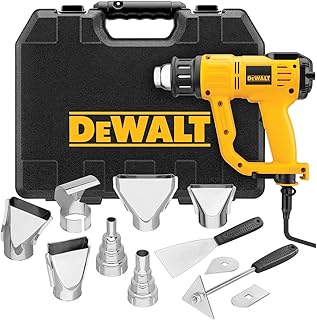

A cordless heat gun is a specialist tool, so the most useful comparison is not simply a question of which model reaches the highest temperature. For buyers considering DEWALT, the important factors include temperature range, airflow control, battery compatibility, nozzle options, handling, heat-up behaviour, portability and the type of work the tool is expected to perform. The DEWALT DCE530N-XJ is the company's dedicated 18V XR cordless heat gun in the UK range. DEWALT specifies two temperature settings, with a high setting of up to 530°C and a low setting of 290°C. It is compatible with the manufacturer's 18V XR batteries and is supplied with reflector and surface nozzles. The tool itself is listed at approximately 0.5 kg, excluding the battery. These specifications make battery-platform compatibility particularly important when comparing the bare tool with a complete kit. DEWALT's UK heat-gun range also includes corded models such as the D26411-GB and D26414-LX. These are useful reference points when deciding whether cordless convenience or mains-powered temperature control is the better fit. The D26414-LX, for example, has an adjustable operating range of 50°C to 600°C and an LCD display, while the D26411-GB uses two operating temperatures and two airflow settings. A cordless heat gun therefore should not automatically be considered a universal replacement for a mains model. Specifications are most useful when they are interpreted in the context of real applications rather than presented as isolated numbers. The DCE530N-XJ combines a compact cordless design with two temperature settings and a maximum specified temperature of 530°C. These figures should be treated as specifications for comparison rather than guarantees of a particular result. Actual working performance can vary according to the battery used, material, ambient conditions, distance from the workpiece, attachment fitted and duration of use. When comparing heat guns, maximum temperature is one of the easiest specifications to notice but one of the least useful on its own. Many jobs require controlled heating rather than maximum heat. Applying excessive heat can damage plastics, scorch coatings, soften materials too aggressively or create unnecessary safety risks. The DCE530's two-setting approach is therefore worth assessing according to the intended application. The lower setting can be preferable when more moderate heat is required, whereas the higher setting provides additional thermal capability for jobs that need substantially more heat. A useful buying question is not “How hot does it get?” but “Can its available settings provide the level of heat I need without making control unnecessarily difficult?” This distinction is particularly important for DIY users who may use the same heat gun for several different materials. Temperature and airflow should be considered together. A heat gun transfers energy through moving hot air, so the amount of heat delivered to a workpiece depends on more than the temperature setting displayed or specified by the manufacturer. For detailed comparisons, look for information about airflow control as well as temperature control. A tool with several temperature settings but limited airflow adjustment may behave differently from a mains-powered model offering more comprehensive control. This is one reason why a cordless heat gun designed around convenience and portability should be compared with other cordless models on the same basis rather than judged solely against a professional variable-temperature mains heat gun. The battery is an integral part of the cordless-tool equation. A bare-tool purchase may appear attractive if you already own compatible DEWALT batteries, while a new user may need to account for the additional cost and physical weight of a battery and charger. For existing DEWALT 18V XR users, compatibility can be a significant advantage. A heat gun that shares a battery platform with drills, impact drivers, saws and other tools can reduce the need to maintain separate battery ecosystems. However, battery compatibility does not mean every battery configuration will feel identical in use. Larger-capacity packs generally add weight and bulk. A compact battery may make sense for short, detail-oriented jobs where manoeuvrability matters, while a higher-capacity pack may be preferable when the tool is expected to operate for longer periods. The distinction between a bare unit and a kit can make a substantial difference to the overall value of a cordless heat gun. A bare DCE530N-XJ is generally the more logical option for someone who already has compatible DEWALT 18V XR batteries and a suitable charger. In that situation, paying for duplicate batteries may add unnecessary expense and storage requirements. A kit can be more appropriate for a buyer entering the DEWALT cordless system for the first time. The important comparison is the total package rather than the headline price of the tool alone. Check exactly which battery capacity, charger and accessories are included because kit contents can differ between listings and markets. For someone already invested in the 18V XR platform, compatibility can be one of the strongest reasons to choose the DCE530. The ability to move batteries between compatible tools can simplify charging and reduce the number of battery systems required in a workshop or van. DEWALT describes the DCE530 as suitable for applications including shrinking electrical tubing, bending PVC pipe, drying materials and loosening nuts and bolts. These examples illustrate the broad role of a heat gun, but the correct temperature and technique depend on the material and application. The main benefit of cordless operation is freedom of movement. On a construction site, during vehicle work or in an area without convenient mains power, removing the cable can make a small specialist task significantly easier. Cordless operation can also reduce cable-management issues when the work requires movement around an object. This can be useful when working outside a workshop or when the job is spread across several locations. The trade-off is that cordless tools depend on battery capacity and require appropriate battery management. For extended stationary operation, a mains-powered heat gun may remain the more practical choice. The choice between cordless and corded heat guns should be based on the working environment rather than on the assumption that one power source is inherently superior. The DEWALT D26414-LX demonstrates the different specification profile possible with a mains-powered model. DEWALT lists an adjustable 50–600°C operating range, an LCD display and temperature adjustment in 10°C increments. That level of adjustment is fundamentally different from the two preset temperature settings of the DCE530. This does not make the corded model automatically better. It means the tools serve different priorities. A buyer who values precise temperature adjustment may favour a corded model, while someone who already owns 18V XR batteries and prioritises mobility may prefer the DCE530. Comparing the main DEWALT heat-gun formats helps clarify which specifications actually matter. The most important conclusion is that these models should not be ranked using a single “best” specification. They are designed around different priorities. The DCE530 is particularly relevant to buyers who value cordless portability and existing battery compatibility, whereas the D26414 is more attractive to users who require precise temperature adjustment. Heat concentration is strongly affected by the nozzle fitted to the tool. A reflector nozzle and a surface nozzle are intended to distribute or direct heat differently, so selecting the correct attachment can improve control and reduce the temptation to compensate by moving the tool excessively close to the workpiece. A surface-oriented attachment can be useful when heat needs to be distributed over a broader area, while a reflector-style attachment can be advantageous for applications where heat needs to be directed around a smaller component. Before buying, check which attachments are supplied as standard and which are optional. Accessory compatibility is particularly important if you are comparing different generations or regional versions of a product. A heat gun may look simple, but ergonomics become important when a task requires repeated passes or prolonged operation. The DCE530 has a compact body and DEWALT specifies a lock-on function intended to improve comfort during longer applications and allow hands-free use where appropriate. The tool also incorporates an LED work light. Although lighting does not change the thermal output, it can improve visibility when the heat gun is being used in a confined or poorly lit area. When comparing models, assess: Heat guns require greater care than their compact size might suggest. The nozzle and surrounding components can become extremely hot, and the air stream can ignite, soften, deform or damage nearby materials. The DCE530 incorporates a trigger lock-off feature designed to reduce accidental starting during transportation and storage. DEWALT also specifies a lock-on function for longer applications. These features should be considered alongside safe working practices rather than as substitutes for them. A higher maximum temperature does not automatically make a heat gun more suitable. Control, application, airflow and the material being heated can be more important than the headline maximum. A bare tool can look inexpensive compared with a kit, but the calculation changes if you need to purchase a compatible battery and charger separately. Published tool weight may not represent the weight you will actually hold. Include the battery when considering comfort and balance. Some models use fixed temperature levels, while others offer variable adjustment and digital displays. If your work involves materials that require careful temperature control, this distinction should be part of the purchasing decision. Nozzles can materially affect how heat is distributed. Confirm which attachments are included before comparing packages on price. Cordless operation is convenient, but a cordless heat gun is still dependent on a charged battery. Buyers planning repeated or extended use should consider their battery inventory and charging arrangements before choosing a cordless model. When comparing current listings, avoid looking only at the product title and advertised headline price. Check the complete specification and package contents. Customer reviews are useful, but they should be interpreted rather than simply counted. A high average rating can conceal differences between users who bought the tool for occasional DIY work and professionals using it frequently. Look for repeated comments concerning battery life, heat-up behaviour, temperature control, ergonomics, nozzle quality, build quality and suitability for particular applications. Give more weight to detailed reviews that explain the task performed than to short comments that merely state that the product is “good” or “bad”. It is also worth checking whether a review relates to the exact model number being considered. Similar-looking DEWALT products can have substantially different power sources, controls and specifications. The DCE530 is particularly relevant to buyers who already use the DEWALT 18V XR ecosystem and want a compact heat gun without introducing a separate battery platform. Its two temperature settings and cordless design make it suited to a range of practical workshop, installation and site applications. It is also worth considering for users who regularly perform short jobs away from a convenient power socket. The absence of a mains cable can be more valuable than fine temperature adjustment in this type of working environment. A corded model may be the better choice where the tool is used for long periods in a fixed workshop position or where precise temperature adjustment is central to the work. For example, a model such as the DEWALT D26414 provides substantially more temperature adjustment than a two-setting cordless heat gun. Buyers working with sensitive materials or processes that benefit from controlled incremental temperature changes should therefore examine the control system before deciding. For occasional DIY work, simplicity can be an advantage. A buyer may not need an LCD temperature display or highly granular adjustment if the intended tasks are straightforward and the materials tolerate a broader temperature range. For DIY users already owning DEWALT 18V XR batteries, the DCE530's platform compatibility can make the purchasing decision easier. For someone starting from scratch, however, the total cost of the battery ecosystem should be considered alongside the heat gun itself. Professional users should assess the tool according to frequency, application and environment. Important considerations include repeatability, control, durability, ergonomics, battery availability and the ability to move between work locations efficiently. For site-based work, cordless operation can offer a meaningful productivity advantage. For workshop-based work, a corded model may provide a better combination of continuous operation and temperature control. A heat gun contains a heating element and airflow system, so keeping the tool clean and protecting it from unnecessary impact can help preserve its condition. Maintenance should always follow the manufacturer's instructions for the exact model. There is no universal temperature that is correct for every job. Material composition, thickness, distance from the nozzle and heating duration all influence the result. The safest approach is to begin conservatively when the material and application permit it, observe the response and increase heat only when necessary. Avoid keeping the nozzle stationary over one small area for an unnecessarily long period. Where a manufacturer of the material provides specific heating instructions, those instructions should take priority over generic heat-gun advice. For buyers specifically seeking a dedicated DEWALT cordless heat gun, the DCE530 is the key model to consider in the UK range. Whether it is the best choice depends on whether cordless portability, 18V XR battery compatibility and its two temperature settings match the intended work. DEWALT specifies a maximum temperature of 530°C on the high setting. The lower setting is specified at 290°C. Yes. The DCE530 is an 18V XR cordless heat gun and is designed to work with DEWALT 18V XR batteries. The DCE530N-XJ is identified by DEWALT as a bare unit, so the battery and charger should not be assumed to be included. Always check the exact listing and package contents before purchase because different product codes can represent different configurations. DEWALT lists a reflector nozzle and a surface nozzle as included accessories with the DCE530N-XJ. Neither is universally better. Cordless models prioritise mobility and convenience, while corded models can offer continuous mains operation and, in some cases, more precise temperature adjustment. The right option depends on the working environment and application. Yes. DEWALT specifically identifies shrinking electrical tubing among the intended applications for the DCE530. The correct technique and temperature should still follow the requirements of the tubing and the electrical application. Heat guns can be used for certain plastic-related applications, including controlled bending of suitable materials. However, plastics have different heat characteristics, and excessive heat can deform, scorch or otherwise damage them. Always follow the material manufacturer's guidance. Existing 18V XR batteries can make the DCE530 particularly attractive because the tool is designed for that battery platform. The decision should still be based on the tool's temperature settings, intended applications and your need for cordless operation. The DCE530 is positioned by DEWALT as a cordless heat gun for users and applications including site work. Whether it is appropriate for a particular professional task depends on the required temperature control, workload, battery arrangements and working environment. Battery capacity and tool performance should not be treated as identical concepts. A larger-capacity battery primarily affects available energy and physical weight; the manufacturer's specifications should be used to determine the tool's rated operating characteristics. Compare the exact model number, power source, temperature settings, maximum temperature, airflow controls, battery compatibility, tool weight, dimensions, nozzle selection, kit contents and current retailer pricing. These factors provide a much more meaningful comparison than star ratings or maximum temperature alone. The strongest reason to choose a DEWALT cordless heat gun is not simply its temperature specification. It is the combination of portability, compact handling and integration with an existing 18V XR battery system. The DCE530 is a particularly relevant option for buyers who need a heat gun for practical site, workshop or installation tasks and value freedom from a mains cable. Its two temperature settings keep operation straightforward, while the supplied reflector and surface nozzles provide different ways to direct heat. However, buyers who need highly precise temperature adjustment should compare it carefully with DEWALT's corded heat guns. The D26414, for example, offers a much wider adjustable temperature range and LCD-based control, demonstrating why a more expensive or more sophisticated specification is not necessarily the same thing as a better cordless alternative. Before making a purchase, compare the exact product code, battery configuration, included accessories, manufacturer's specifications and today's retailer pricing. For an independent buying decision, verified customer reviews can then be used as a secondary source of information about everyday handling and long-term ownership, rather than as a substitute for checking the technical specification.DEWALT Cordless Heat Gun: What to Look For Before Buying
DEWALT DCE530N-XJ Specifications Explained
Why Temperature Range Matters More Than a Single Maximum Figure
Airflow Is a Separate Specification From Temperature
Battery Choice: One of the Most Important Buying Decisions
Bare Tool or Kit: Which DEWALT Heat Gun Should You Buy?
Bare Tool
Complete Kit
Existing Battery-Platform Users
What Can a Cordless Heat Gun Be Used For?
Applications Where a Cordless Heat Gun Has a Clear Advantage
DEWALT Cordless vs Corded Heat Guns
DEWALT DCE530 vs D26411 vs D26414: Key Differences
Nozzle Selection: Why the Attachment Changes the Result
Ergonomics and Handling
Safety Features and Responsible Use
Common Buying Mistakes
Choosing by Maximum Temperature Alone
Ignoring Battery Costs
Forgetting the Added Battery Weight
Assuming All Heat Guns Have the Same Control
Buying Without Checking Accessories
Confusing Portability With Runtime
How to Compare DEWALT Cordless Heat Gun Deals
How to Assess Customer Reviews Properly
Who Should Consider the DEWALT DCE530?
Who May Be Better Served by a Corded Heat Gun?
What Makes a Good Heat Gun for DIY Use?
What Makes a Good Heat Gun for Professional Use?
Maintenance and Storage Guidance
How to Choose the Right Temperature for a Material
DEWALT Cordless Heat Gun Buying Checklist
Frequently Asked Questions About DEWALT Cordless Heat Guns
What is the best DEWALT cordless heat gun?
How hot does the DEWALT DCE530 get?
Is the DEWALT DCE530 battery powered?
Does the DEWALT DCE530 come with a battery?
What nozzles are included with the DCE530?
Is a cordless heat gun better than a corded heat gun?
Can the DCE530 be used for heat-shrink tubing?
Can a heat gun be used on plastic?
Should I buy a DEWALT heat gun if I already own XR batteries?
Is the DCE530 suitable for professional use?
Does a larger battery make a cordless heat gun more powerful?
What should I compare when shopping for a DEWALT heat gun in the UK?
Final Buying Advice
Editorial Comparison Summary