

Our experts reviewed the latest {category_name } to help you compare quality, performance, durability and overall value before making your purchase.


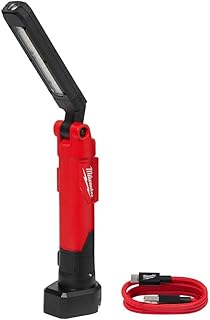


Milwaukee cordless lighting covers a much wider range of applications than a conventional handheld torch. The current range includes compact M12 task lights, long-range search lights, inspection lights, lanterns, area lights, underhood lights, multi-directional work lights and larger site-lighting solutions. The best choice therefore depends less on choosing the highest lumen figure and more on matching the beam, battery platform, mounting options, runtime and physical design to the job. Milwaukee's TRUEVIEW lighting technology is used across many of its cordless lighting products. The company's UK range is designed around different combinations of output, beam distance, portability, runtime and mounting flexibility rather than treating every work light as an interchangeable torch. The first buying decision for an existing Milwaukee user is often the battery platform. M12 and M18 lights are designed for different priorities, although there is considerable overlap between the two ranges. The M12 Pivot Area Light is a useful example of the platform's design philosophy. Milwaukee specifies up to 700 lumens, a pivoting head, magnetic mounting, IP54 protection and compatibility with M12 batteries. Its head can be positioned through 110 degrees in each direction, giving considerably more flexibility than a fixed-beam torch. Milwaukee's UK portable-lighting range includes M18 solutions ranging from compact lighting to high-output area illumination. The manufacturer lists portable models by maximum lumen output, battery system and application, making those specifications more useful for comparison than simply searching for the brightest torch. Lumens measure the amount of visible light produced, but they do not tell you how effectively that light will illuminate the particular area you are working in. A high-output flood light and a long-range search torch can have very different practical results even when their headline specifications appear similar. For example, Milwaukee's M18 LED Search Light is specified at up to 1,250 lumens and a beam distance of up to 650 metres, with separate spot, flood, spot/flood and strobe modes. That combination makes it fundamentally different from a broad area work light designed to illuminate a nearby workspace. A search light is preferable when the objective is to see something well beyond arm's reach. Typical applications include checking distant equipment, inspecting external areas, identifying cables or infrastructure and locating objects in poorly illuminated surroundings. The M18 LED Search Light illustrates why beam distance should be considered separately from lumen output. Its pivoting head and four lighting modes allow it to switch between concentrated long-distance illumination and wider close-range lighting. An area light is usually the better choice when the light needs to illuminate a room, workbench, vehicle bay, plant area or section of a construction site rather than a single distant point. For these applications, mounting flexibility can be more valuable than maximum beam distance. A magnetic base, hanging hook, articulated head or multiple independently adjustable light panels can allow the user to position illumination where it is actually needed. Milwaukee's M18 Multi-Directional Task Light is aimed at situations where broad illumination is required from several directions. Milwaukee specifies up to 4,500 lumens and three individual light heads, with nine total output modes. The heads can be adjusted independently, allowing the user to change the illuminated area instead of relying on one fixed beam. This type of design is particularly relevant for users who regularly work in changing environments. Rather than placing several separate lamps around a workspace, a multi-directional unit can provide several lighting angles from one battery-powered source. The practical trade-off is size and weight. A large area light is less convenient to carry continuously than a compact M12 torch, so buyers should distinguish between portable illumination and stationary workspace illumination. Hands-free positioning is one of the most useful features to consider when comparing cordless work lights. A light that can be securely positioned may illuminate a job more effectively than a brighter torch that has to be held throughout the task. Magnetic bases or rear magnets are particularly useful around steel structures, vehicle bodies, tool cabinets and other ferrous surfaces. They are quick to reposition and can leave both hands available for the task. Integrated hooks are useful for rafters, pipes, brackets and temporary overhead positioning. Check the shape and strength of the hook against the intended environment rather than assuming every hook is suitable for every surface. Some work lights include keyhole mounting points or fixing holes for more secure positioning. These are useful when the same lighting location is used repeatedly. A rotating or pivoting light head can be especially valuable in cramped spaces. Instead of moving the entire lamp, the user can redirect the beam while keeping the base securely positioned. Ingress protection should be checked whenever a work light is likely to encounter dust, splashing water or changing site conditions. An IP rating does not mean that every light is suitable for every outdoor or wet environment. For example, Milwaukee specifies the M12 Pivot Area Light as IP54, meaning the product has defined protection against dust ingress and water splashing from relevant directions. It is important not to assume that all Milwaukee lights have the same protection level. The manufacturer's specifications should be checked for the exact model before using a light outdoors, around wash-down areas or in environments where water exposure is expected. Work lights used on construction sites, workshops and service vehicles can experience considerably more physical abuse than household lighting. Drop resistance, lens protection, housing construction and thermal management are therefore meaningful buying considerations. The M12 Pivot Area Light, for example, is specified by Milwaukee as capable of withstanding drops of up to 3 metres and is protected by an impact-resistant design. Milwaukee also describes reinforced, impact-resistant housings and lenses across its work-lighting range, with thermal management intended to protect LED components during use. However, a stated drop rating should not be interpreted as permission to deliberately drop or abuse the product. Real-world durability depends on the circumstances of an impact, the surface involved and the condition of the light. Runtime is one of the easiest specifications to misunderstand. A stated maximum runtime normally relates to a particular battery capacity and a particular output mode. The same light can therefore operate for very different periods depending on brightness, battery size and operating conditions. When comparing products, look for runtime figures at the output level you are actually likely to use. A headline figure measured on the lowest setting may be less useful than a shorter but realistic runtime at medium or high output. Milwaukee provides different runtime figures for different output settings on several of its lighting products. Its published specifications for the M18 service and area lighting range demonstrate why output mode and runtime should be considered together rather than treated as separate specifications. Milwaukee's TRUEVIEW technology is positioned as a high-definition lighting system intended to provide consistent beams, an optimised colour temperature and accurate representation of colours and detail. For professional work, accurate visual representation can be relevant when distinguishing wires, components, markings, surface defects and other details. This is one reason a work light should not be evaluated purely by its maximum lumen rating. A compact pivoting or inspection light can be advantageous where work takes place inside consumer units, service spaces, ceilings and other confined areas. Look for a directional head, magnetic mounting and a body that can be positioned without occupying both hands. Vehicle work often benefits from a combination of underhood, inspection and area lighting. A light with strong mounting options can be particularly useful because it can remain positioned while both hands are used for tools and components. Construction sites can require broad area illumination rather than a narrow beam. M18 area and multi-directional solutions are worth comparing where a large workspace needs to be illuminated from several angles. Plumbing and heating work often involves cupboards, plant rooms, crawl spaces and poorly illuminated service areas. A compact M12 light can be attractive where portability is important, while a larger M18 work light may make more sense for extended work in a larger plant room. Long-distance visibility can be particularly useful when inspecting an area away from the immediate vehicle. A search light with spot and flood modes offers greater versatility than a conventional close-range work light. DIY users should avoid automatically buying the largest M18 light. If the light is mainly needed for occasional repairs, decorating, assembly or inspection, a smaller M12 or USB-rechargeable model may be easier to store and handle. Maximum brightness is not the same as suitability. Excessive output can be unnecessary for close inspection work, while a narrow high-output beam may be unsuitable for illuminating a whole room. If a user already has several M12 batteries, moving to M18 purely for a torch can increase the total cost of ownership because the battery and charger may need to be purchased separately. Conversely, an M18 user may find an M18 light more convenient even when a smaller M12 alternative is available. Search lights are designed around distance. Area lights are designed around workspace coverage. Inspection lights prioritise access and close-range visibility. Choosing the wrong category can matter more than choosing between two models with similar headline specifications. A light that is technically powerful may become inconvenient if it is carried for hours. For frequent handheld use, weight, grip shape and balance deserve as much attention as lumen output. Always check the output setting associated with a published runtime. Lower brightness settings can deliver substantially longer operating periods than maximum-output operation. Many cordless lighting products are sold as body-only units. Before comparing retailer prices, check whether the package contains the light alone or includes a battery and charger. A seemingly cheaper kit can have a very different total cost once the required battery system is included. A useful comparison should record more than price and maximum lumens. The following criteria provide a better basis for commercial investigation. Milwaukee cordless lighting is frequently sold in body-only configurations. This can be an advantage for users who already own compatible batteries because it avoids duplicating chargers and battery packs. For someone entering a Milwaukee battery platform for the first time, however, the relevant comparison is the complete system cost rather than the advertised body-only price. Include the required battery and charger when calculating the actual purchase requirement. Also check the exact battery generation and capacity recommended for the product. A larger battery may provide longer runtime but can increase the overall weight and alter how convenient the light is to carry or mount. Customer reviews can provide useful information, but they are most valuable when read alongside the manufacturer's specifications. Instead of relying on an overall star rating, look for repeated comments about the characteristics that matter to your application. Customer feedback should supplement, rather than replace, technical specifications. A reviewer may value maximum brightness while another may prioritise compact size, so the most useful review is one describing a use case similar to yours. Good maintenance helps preserve the usefulness of a cordless work light, particularly when it is regularly used in dusty workshops or construction environments. For UK buyers, availability of batteries, chargers and compatible Milwaukee tools can be as important as the light itself. Before purchasing, establish which cordless system is already present in the workshop or van and whether additional batteries are likely to be needed during a normal working day. It is also sensible to compare the exact model number rather than relying solely on product names. Similar-looking Milwaukee lights can have different output levels, battery requirements, mounting arrangements or included accessories. When checking today's prices, compare like-for-like packages. A body-only light, a light with one battery and a complete charger kit should not be treated as equivalent products simply because the light itself has the same model name. If you are unsure which model category is appropriate, start with the job rather than the product catalogue. The strongest buying decision is not necessarily the model with the largest specification number. A well-matched Milwaukee light should provide the right combination of illumination, portability, battery compatibility, positioning and durability for the intended job. The current Milwaukee UK lighting range demonstrates the breadth of available designs. Compact M12 products can prioritise portability and flexible positioning, while M18 solutions extend into higher-output area and multi-directional lighting. The M18 LED Search Light sits in a different category again, combining a long-distance beam with selectable spot and flood operation. For commercial buyers and professionals, the most sensible approach is therefore to compare the complete specification rather than choosing solely by lumen output or price. Consider the battery ecosystem, intended application, operating duration, mounting method, environmental exposure and physical size before making the final decision. There is no single best Milwaukee cordless torch for every user. The right choice depends on whether you need long-range illumination, close inspection, broad area lighting, compact portability or hands-free positioning. Neither platform is universally better. M12 is particularly attractive when compactness and portability are important, while M18 provides access to a broad range of higher-output lighting solutions. Existing battery ownership should be a major factor in the decision. They can be particularly practical for professional users who already operate within the Milwaukee battery ecosystem. The range includes purpose-built lighting for different applications rather than relying on one general-purpose torch design. Maximum output varies by product category and model. Milwaukee's UK range includes multi-directional and area-lighting products with substantially higher output than compact handheld lights. For example, the M18 Multi-Directional Task Light is specified at up to 4,500 lumens. The M18 LED Search Light is specified by Milwaukee with a beam distance of up to 650 metres. Actual visibility depends on environmental conditions, the object being illuminated and the surrounding level of darkness. No. Lumens indicate light output but do not fully describe beam concentration, distance, coverage, runtime or usability. A lower-output light can be the better option for close inspection or confined spaces. It depends on the exact product and package. Many cordless lighting products are available as body-only units, so check the listing carefully to establish whether the battery and charger are included. Some models have ingress protection designed to resist specified environmental exposure, but ratings differ between products. Check the exact model's IP rating and manufacturer instructions before using a light in wet or exposed conditions. Compare the battery platform, lumen output, beam distance, beam pattern, runtime, output modes, head adjustment, mounting options, IP rating, impact resistance, weight and whether the battery and charger are included. Some search lights provide both spot and flood modes, making them more versatile than a dedicated long-range torch. The M18 LED Search Light, for example, provides spot, flood, combined spot/flood and strobe modes. Battery capacity affects operating time and can also influence the overall weight of the light. A larger battery may be useful for extended operation, while a smaller pack can be preferable when portability matters.How to Choose the Right Milwaukee Cordless Torch or Work Light
M12 vs M18 Milwaukee Lighting: Which Battery Platform Makes More Sense?
Milwaukee M12 Lighting
Milwaukee M18 Lighting
Why Lumens Alone Should Not Decide Your Purchase
Milwaukee Search Lights vs Area Lights
Choose a Search Light for Distance
Choose an Area Light for Workspace Illumination
Milwaukee Multi-Directional Task Lighting
Mounting Options Can Be More Important Than Extra Lumens
Magnets
Hooks
Keyhole Mounts and Screw Fixings
Pivoting and Articulating Heads
Understanding IP Ratings on Milwaukee Cordless Lights
Impact Resistance and Jobsite Durability
Runtime: How to Compare Battery Life Properly
TRUEVIEW Lighting: What Buyers Should Look For
Which Milwaukee Light Is Best for Different Jobs?
For Electricians
For Mechanics
For Construction Workers
For Plumbing and Heating Engineers
For Vehicle Recovery and Roadside Work
For General DIY
Milwaukee Cordless Torch Features Worth Paying For
Common Buying Mistakes
Buying the Highest-Lumen Model Automatically
Ignoring the Battery You Already Own
Confusing a Search Light with a Work Light
Overlooking Weight
Assuming Runtime Means Maximum Brightness
Forgetting That Bare Tools May Exclude the Battery
How to Compare Milwaukee Cordless Torches Side by Side
Body-Only vs Kit: What Does the Buyer Actually Need?
How to Use Customer Reviews More Effectively
How to Choose Between a Torch, Inspection Light and Area Light
Maintenance Tips for Milwaukee Cordless Lighting
Buying Advice for UK Tradespeople
Milwaukee Cordless Lighting: A Practical Decision Framework
Milwaukee Cordless Torches and Lighting: What Matters Most in 2026?
Frequently Asked Questions
Which Milwaukee cordless torch is best?
Is Milwaukee M12 or M18 better for lighting?
Are Milwaukee cordless work lights worth considering for professional use?
What is the brightest Milwaukee cordless work light?
How far can a Milwaukee cordless search light shine?
Does a higher lumen rating mean a better torch?
Are Milwaukee cordless lights supplied with batteries?
Can Milwaukee work lights be used outdoors?
What should I compare before buying a Milwaukee work light?
Is a Milwaukee search light suitable for close-up work?
How important is the battery capacity?
Final Buying Checklist