

Our experts reviewed the latest {category_name } to help you compare quality, performance, durability and overall value before making your purchase.


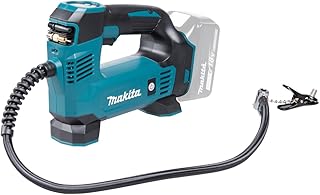


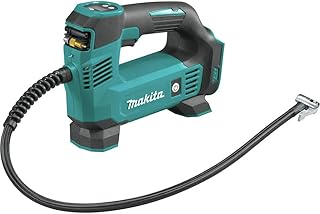
Choosing a Makita cordless inflator is less about finding the model with the biggest pressure figure and more about matching the pump to the type of inflation work you actually do. A compact inflator intended for occasional car-tyre top-ups has different priorities from a higher-output model designed to deal with larger tyres, repeated inflation or a wider range of applications.
For UK buyers, the most important comparison points include maximum pressure, air delivery rate, inflation modes, battery compatibility, hose length, pressure control, display visibility, automatic shut-off, portability and what is included with the particular package. It is also important to distinguish a bare tool from a kit containing batteries and a charger, because Makita cordless tools are commonly sold in several configurations.
The Makita DMP180Z and DMP181Z are two of the most relevant models to compare when looking for an 18V LXT cordless inflator. Both are designed around Makita's 18V LXT battery platform, use digital pressure control and are intended for applications such as vehicle tyres, bicycles and sports equipment. However, their performance characteristics are not identical.
The DMP180 is rated at up to 830 kPa, equivalent to 8.3 bar or approximately 121 psi, with an air discharge rate of up to 12 L/min at 200 kPa. Makita also specifies automatic stopping at the selected pressure, a backlit digital pressure gauge, an LED job light and thermal protection. :contentReference[oaicite:0]{index=0}
The DMP181Z increases the maximum pressure capability to 1,110 kPa, or 11.1 bar, and provides a higher air delivery rate. Published specifications give up to 22 L/min at 200 kPa, 11 L/min at 700 kPa and 7 L/min at 1,100 kPa. It also introduces three inflation modes, making it a more versatile choice where inflation speed and application-specific control matter. :contentReference[oaicite:1]{index=1}
One of the easiest mistakes when comparing cordless inflators is to treat maximum PSI or bar as an indication of how quickly a pump will inflate a tyre. These are different measurements.
Maximum pressure indicates the upper pressure the pump is designed to reach. Air delivery rate indicates how much air the pump can move under a specified condition. As pressure rises, the effective delivery rate generally falls, which is why manufacturers may publish several airflow figures at different pressures.
The DMP180, for example, is specified at 12 L/min at 200 kPa, 8 L/min at 700 kPa and 7 L/min at 830 kPa. This illustrates why a single headline flow figure should not be used to predict the complete inflation time of a tyre. :contentReference[oaicite:2]{index=2}
When comparing Makita inflators, look at both maximum pressure and air delivery at relevant pressures. A pump with a very high theoretical pressure rating is not automatically the fastest choice for everyday inflation.
Battery compatibility can be one of the strongest reasons to choose a particular Makita inflator. If you already own compatible Makita 18V LXT batteries and chargers, a bare-tool inflator can make more practical sense than buying another complete battery system.
Conversely, buyers starting from scratch should calculate the total cost of ownership rather than comparing bare-tool prices alone. A body-only DMP180Z or DMP181Z does not provide the same out-of-box setup as a kit containing a suitable battery and charger. UK retailers list body-only configurations for both models, so the contents of the package should always be checked before purchase. :contentReference[oaicite:3]{index=3}
A digital pressure gauge is particularly useful when an inflator is being used for routine tyre maintenance. Instead of repeatedly checking pressure with a separate gauge, the operator can select the desired setting on the tool and monitor the displayed value during inflation.
Automatic shut-off is another feature worth prioritising. The DMP180 is designed to stop when the preset target pressure is reached, while the DMP181Z also provides automatic stopping at the selected pressure. :contentReference[oaicite:4]{index=4}
This does not remove the need for sensible operation. Tyre pressures should be set according to the vehicle, tyre and manufacturer's recommendations, rather than simply choosing a high pressure because the inflator can achieve it.
The DMP181Z is particularly interesting for buyers who want more control over how the pump behaves. Its three inflation modes are intended to provide different approaches to inflation, including a lower-output mode, a ball mode and a high-speed mode. :contentReference[oaicite:5]{index=5}
That flexibility can be useful when moving between applications. A high-speed setting can be more appropriate when moving a larger volume of air, whereas a more controlled mode may be preferable for smaller items or applications where excessive airflow is unnecessary.
For buyers who only need an inflator for occasional vehicle-tyre adjustments, the additional modes may not justify choosing the larger model. For households, workshops or tradespeople who regularly inflate different types of equipment, they can make the DMP181Z considerably more versatile.
Specification sheets can make hose length look like a minor detail, but it directly affects how convenient an inflator is to use. Both the DMP180 and DMP181 family are associated with a hose length of approximately 650 mm. :contentReference[oaicite:6]{index=6}
A hose of this length can make it easier to reach a tyre valve without positioning the entire tool directly against the valve. Nevertheless, users should consider where the battery, pump body and valve are likely to sit during normal use, particularly with larger vehicles.
Cordless inflators are attractive because they eliminate the need for a mains cable or a vehicle's 12V socket during use. Portability therefore becomes an important part of the buying decision.
The DMP180 is specified at approximately 1.4–1.7 kg depending on the battery configuration. :contentReference[oaicite:7]{index=7} The DMP181 is heavier, with published product specifications commonly placing the bare-tool configuration around 2.1 kg. :contentReference[oaicite:8]{index=8}
The weight difference is worth considering if the inflator will be carried frequently, kept in a vehicle or used away from a workshop. If higher output is unnecessary, a lighter model may be easier to handle. If speed and versatility are more important, the additional capability of the DMP181Z may be the better trade-off.
An integrated LED job light is a useful practical feature when checking a tyre valve in a poorly lit driveway, garage or roadside situation. The DMP180 includes an LED job light, while the DMP181Z is also specified with an integrated LED work light. :contentReference[oaicite:9]{index=9}
This should be regarded as a convenience feature rather than a substitute for proper lighting or safe roadside working practices.
Cordless inflators can generate significant heat during operation, particularly when working against high pressure. Thermal protection is therefore more meaningful than simply looking at the maximum PSI figure.
Makita specifies thermostat protection on the DMP180, while listings for the DMP181Z also identify overheating protection. :contentReference[oaicite:10]{index=10}
For repeated inflation work, buyers should still follow the manufacturer's operating instructions and avoid assuming that a cordless inflator is intended to run continuously like a workshop compressor. A tool's maximum pressure does not indicate how long it can safely operate without interruption.
These inflators are primarily portable inflation tools rather than substitutes for every type of compressor. Typical applications include:
The DMP180 is specifically described for car and bicycle tyres, sports balls and similar applications, with multiple adapters supplied for different valve types. :contentReference[oaicite:11]{index=11}
A cordless tyre inflator should not automatically be treated as a replacement for a conventional workshop compressor. The two types of equipment serve different purposes.
A portable inflator is convenient for topping up pressure, roadside use and occasional inflation. A compressor with a tank is generally better suited to tasks requiring sustained airflow, pneumatic tools or repeated high-volume air delivery.
Understanding the specification sheet makes it easier to compare products without being distracted by marketing terminology.
Makita's model naming can make different packages appear more similar than they actually are. A model ending in Z is commonly encountered as a body-only configuration, meaning the battery and charger may need to be purchased separately.
For example, UK listings identify the DMP180Z as a tool-only product, while DMP181Z listings also commonly specify that batteries and chargers are not included. :contentReference[oaicite:12]{index=12}
Before ordering, check the retailer's exact box contents. Do not assume that an image showing a Makita battery means the battery is included in the advertised package.
A higher maximum-pressure number can look impressive, but most everyday car tyres operate well below the maximum capability of these tools. Consider airflow, control and intended use as well.
A low bare-tool price can be misleading if you do not already own a compatible battery and charger. Calculate the complete setup before comparing alternatives.
The DMP180 and DMP181 are both 18V LXT inflators, but their pressure, airflow and operating features differ. Model numbers matter.
An airflow figure without its test pressure provides incomplete information. Always check the pressure at which the stated delivery rate was measured.
If the inflator will be used for bicycles, balls or inflatables as well as vehicle tyres, check which adapters are included and whether they suit the valves you intend to use.
Automatic stopping is convenient, but the correct target pressure still needs to be selected. Always use the pressure specification appropriate to the vehicle, tyre or equipment.
Prioritise compact dimensions, simple controls, automatic shut-off, a readable digital gauge and compatibility with batteries you already own. The DMP180Z is worth considering where its 8.3-bar maximum pressure and 12 L/min maximum published delivery rate meet your requirements. :contentReference[oaicite:13]{index=13}
The DMP181Z is the stronger candidate where greater airflow, a higher maximum pressure and three inflation modes are useful. Its published maximum pressure is 11.1 bar, with delivery rates reaching 22 L/min at 200 kPa. :contentReference[oaicite:14]{index=14}
If you already have compatible Makita 18V LXT batteries, a body-only model may be particularly convenient. The key question is not simply which inflator costs less, but whether the tool adds useful capability to the battery ecosystem you already use.
Compare the total cost of the inflator, battery and charger. Also consider whether other cordless tools you may purchase later use the same battery system. A platform decision can matter more over time than a small difference in the initial tool price.
Customer reviews can add useful information, but they should be interpreted alongside technical specifications. Look for repeated comments about practical issues such as ease of use, gauge readability, battery consumption, hose handling, adapter storage and suitability for the intended application.
A single enthusiastic or negative review is less informative than a recurring pattern across a substantial number of verified purchases. Equally, reviews for one package should not automatically be assumed to apply to every variant of the same model.
When comparing the DMP180Z and DMP181Z, filter your research by the exact model number and, where possible, the exact battery or kit configuration. This prevents reviews for a different Makita inflator or package from influencing the decision.
Portable inflators benefit from sensible storage and routine inspection. Keep the tool clean, protect the hose and fittings from unnecessary damage, and store adapters where they cannot be lost.
For routine tyre maintenance, check the recommended pressure for the vehicle rather than using the inflator's maximum pressure as a target. Vehicle manufacturers commonly specify different pressures depending on load, axle position or driving conditions, so the correct figure should be taken from the vehicle's authoritative documentation or the applicable manufacturer's information.
Attach the hose securely to the valve, select the required pressure and allow the inflator's automatic stopping function to operate where appropriate. After inflation, check that the valve connection is secure and that there are no obvious signs of leakage or damage.
If a tyre repeatedly loses pressure, inflating it again is not a substitute for investigating the cause. A persistent pressure loss can indicate a puncture, valve problem, wheel issue or another fault requiring proper attention.
The justification for moving from the DMP180Z to the DMP181Z is primarily about capability rather than branding. The DMP181Z offers a higher 11.1-bar maximum pressure, substantially higher airflow at lower pressure and three inflation modes. :contentReference[oaicite:15]{index=15}
Those differences matter when the inflator is expected to handle a broader range of tasks or when reducing inflation time is a priority. They matter less if the tool will spend most of its life performing occasional pressure top-ups on ordinary passenger-car tyres.
The DMP180Z remains attractive because it combines the core features many domestic users actually need: cordless operation, a digital pressure gauge, preset-pressure stopping, LED lighting, multiple adapters and a compact design. Its published 8.3-bar maximum pressure is already substantially above the pressures normally required for many everyday tyre applications. :contentReference[oaicite:16]{index=16}
In other words, buyers should not automatically pay for higher specifications that they will rarely use. The better product is the one whose capabilities align with the jobs you expect it to perform.
The biggest practical advantage of a cordless Makita inflator is independence from the vehicle's 12V accessory socket. This can be useful when working away from the car or when you already have a compatible Makita battery collection.
A 12V inflator can nevertheless be a sensible alternative for drivers who want a permanently vehicle-based solution and do not use cordless power tools. The comparison should therefore include purchase cost, storage requirements, power source, hose arrangement, pressure control and expected frequency of use.
A cordless inflator wins on portability and convenience, whereas a workshop compressor is generally designed around sustained air delivery and a wider range of pneumatic applications. The right choice depends on the job rather than the headline specification.
There is no single best model for every buyer. The DMP180Z is a strong fit for users who want a compact 18V LXT inflator for everyday inflation, while the DMP181Z is more suitable when higher airflow, greater maximum pressure and three inflation modes are valuable.
Its published maximum pressure is 8.3 bar or 121 psi, and Makita specifies it for inflating car tyres as well as bicycles and sports equipment. :contentReference[oaicite:17]{index=17} For any particular vehicle, the important point is whether the required tyre pressure falls within the tool's operating specification.
The DMP181Z has a higher published air delivery rate, reaching 22 L/min at 200 kPa compared with 12 L/min for the DMP180 at 200 kPa. :contentReference[oaicite:18]{index=18} Actual inflation time will vary with tyre size, starting pressure, target pressure, battery condition and operating conditions.
Common UK DMP180Z listings are sold as body-only products, so a battery and charger should not be assumed to be included. Always check the exact retailer package contents before ordering. :contentReference[oaicite:19]{index=19}
The DMP181Z is also commonly sold as a bare tool without a battery or charger. Complete kits exist separately, so check the exact model and package description before purchase. :contentReference[oaicite:20]{index=20}
Yes. Makita specifies the DMP180 for bicycle applications and supplies valve adapters for different inflation tasks. The DMP181Z is likewise designed for a range of tyre and inflation applications. :contentReference[oaicite:21]{index=21}
Yes, with the appropriate ball adapter and when operated according to the manufacturer's instructions. The DMP180 is specifically described for sports balls, and the DMP181Z is also supplied with accessories intended for varied inflation applications. :contentReference[oaicite:22]{index=22}
It can be if you need its additional performance. The DMP181Z offers a higher maximum pressure, greater airflow and three inflation modes. If your use is mainly occasional passenger-car tyre top-ups, the DMP180Z may already provide the functionality you need.
Yes. Automatic stopping at a preset pressure is a feature of the DMP180, and the DMP181Z also provides an automatic-stop function. :contentReference[oaicite:23]{index=23}
They can be useful for portable tyre-pressure adjustments provided the battery is charged and the tyre itself is safe to inflate. They should not be used as a substitute for proper roadside safety procedures or professional assistance where a tyre is damaged or unsafe.
Start with maximum pressure and air delivery, then consider inflation modes, battery compatibility, weight, hose length, gauge visibility, automatic shut-off, thermal protection and included accessories. Finally, check the exact package contents and current verified reviews.
The best Makita cordless inflator is ultimately the model that provides enough performance without making you pay for capabilities you will not use. For straightforward tyre maintenance and occasional inflation, the DMP180Z offers a compact and well-equipped 18V LXT solution. For buyers who value higher output, a higher pressure ceiling and multiple inflation modes, the DMP181Z provides the more capable specification.
Before buying, compare the exact model number, technical specifications, battery configuration and included accessories. Check current verified customer reviews and compare today's retailer information rather than relying on a product title or an outdated price. Most importantly, judge the inflator against your actual applications: everyday tyre top-ups, bicycles and sports equipment require a different level of performance from repeated high-volume or specialist inflation work.