

Our experts reviewed the latest {category_name } to help you compare quality, performance, durability and overall value before making your purchase.


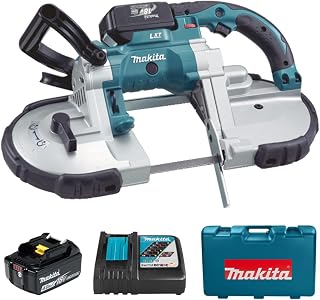


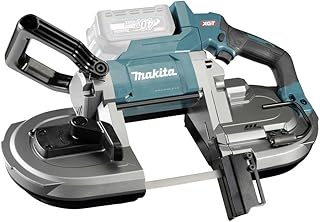
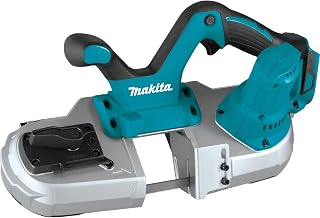


Choosing a Makita cordless bandsaw is less about finding the newest-looking model and more about matching the saw's cutting capacity, physical size, blade characteristics, battery platform and intended workload. Makita's cordless portable bandsaw range includes machines with very different proportions and capacities, so comparing the model numbers alone can be misleading. For UK buyers, the first question should be what you actually need to cut. A compact bandsaw designed around approximately 50 mm material is a very different proposition from a larger machine capable of cutting 120 mm stock. The right choice depends on the diameter or cross-section of the material, how frequently the tool will be moved around a site, how much clearance is available, and whether portability or maximum capacity matters most. It is also important to distinguish a portable bandsaw from an abrasive cut-off saw, angle grinder or stationary workshop bandsaw. A portable bandsaw uses a continuous toothed blade running around wheels, making it particularly useful where controlled cuts, reduced sparks and relatively clean cutting are priorities. It is commonly considered for metalwork, installation work, fabrication, maintenance, pipework, electrical and mechanical work, and cutting ferrous materials to manageable lengths. The most useful way to compare Makita portable cordless bandsaws is to look beyond marketing descriptions and examine measurable specifications. The DPB180, DPB181, DPB183 and DPB184 illustrate how much the capacity and physical design can vary within the range. The DPB180 is the high-capacity option among these models. Its published maximum cutting capacity is 120 mm for round workpieces and 120 mm by 120 mm for rectangular workpieces. Its blade speed is specified at 1.4 to 2.7 m/s, while its blade measures 1,140 mm long, 13 mm wide and 0.5 mm thick. The published dimensions are approximately 523 mm by 231 mm by 313 mm, with weight varying according to configuration and battery. The DPB181 occupies a more compact position. Its maximum capacity is 64 mm for round material and 64 mm by 64 mm for rectangular workpieces, with a 3.2 m/s blade speed and an 835 mm by 13 mm by 0.5 mm blade specification. Its stated bare-tool dimensions are approximately 468 mm by 197 mm by 233 mm and its net weight is listed at around 3.2 kg without the battery. The DPB183 is another compact 18V option, with published capacity of 66 mm for round material and 66 mm by 66 mm for square material. Its variable blade speed reaches 3.2 m/s and it uses an 835 mm long, 13 mm wide and 0.5 mm thick blade. Published specifications put the machine at approximately 392 mm by 174 mm by 242 mm with an indicated weight range of roughly 3.6 to 3.9 kg depending on battery configuration. The DPB184 is particularly relevant where access and compact dimensions are more important than maximum cutting capacity. It is specified for round workpieces up to 51 mm and rectangular workpieces up to 51 mm by 51 mm. Its variable blade speed reaches 3.2 m/s, and it uses a 730 mm long, 13 mm wide and 0.5 mm thick blade. Published specifications give dimensions of approximately 373 mm by 162 mm by 223 mm and a net weight range of about 3.3 to 3.6 kg, depending on configuration. There is no universally best Makita cordless bandsaw because these machines target different requirements. The key distinction is capacity versus portability. These figures should not be treated as a ranking. A larger capacity does not automatically make a saw better for every job. If most of your cuts involve smaller conduit, tube, threaded rod, bar, pipe or other stock below 51 mm, carrying a larger machine may offer little practical advantage. Conversely, repeatedly approaching the capacity limit of a compact saw can make the larger DPB180 considerably more logical. Cutting capacity is one of the easiest specifications to overlook and one of the hardest mistakes to correct after purchase. Before comparing prices, measure the largest material you realistically expect to cut. Do not only consider today's typical workload. Think about the largest job you are likely to encounter during the tool's useful life. A bandsaw that comfortably handles 30 mm material may be perfectly suitable for routine installation work but frustrating if occasional 60 mm or larger cuts are part of the job. Remember that manufacturers normally state maximum capacities under specified conditions. Maximum capacity should not be interpreted as a promise that every material, blade and cutting position will produce the same cutting experience. Material hardness, section shape, blade tooth configuration, operator technique and workpiece stability all affect the practical result. Round and rectangular capacities should also be read separately. A saw rated for a particular diameter is not necessarily equivalent to a saw rated for the same nominal dimension across every irregular, hollow or structural section. Blade speed is important because different materials and cutting conditions can benefit from different operating speeds. The DPB180 is specified at 1.4 to 2.7 m/s, while the DPB183 and DPB184 provide variable blade speed up to 3.2 m/s. The DPB181 is specified at 3.2 m/s. Variable speed can be particularly useful when the saw is expected to handle more than one type of work. Instead of treating maximum speed as automatically desirable, consider whether you need the ability to slow the blade for greater control or adjust the operating rate to suit the material. A common buying mistake is comparing only the maximum blade speed. Maximum speed is one number; controllability is another. For a mixed-workload user, the ability to select an appropriate speed can be more useful than a higher headline figure. Portable bandsaw blades are not interchangeable simply because two saws are both made by the same manufacturer. Blade length is an important compatibility specification. The DPB180 uses a 1,140 mm blade, whereas the DPB181 and DPB183 use 835 mm blades and the DPB184 uses a 730 mm blade. All four are specified with a 13 mm blade width and 0.5 mm thickness in the cited specifications. When buying replacement blades, check the exact model and the manufacturer's specified blade dimensions rather than assuming that a generic portable bandsaw blade will fit. Also consider tooth configuration and the material being cut. A suitable blade can have a greater effect on cutting performance and blade life than simply choosing a more powerful battery. Blade tooth pitch should be considered alongside material thickness. A blade intended for thinner sections generally needs an appropriate tooth arrangement to maintain effective engagement with the workpiece, while thicker sections require a tooth configuration capable of clearing material efficiently. For regular professional use, it can be sensible to keep more than one suitable blade specification available rather than attempting to make one blade cover every job. The correct choice depends on the material, section thickness and manufacturer's recommendations for the particular bandsaw. Do not judge a blade solely by the number of teeth per inch printed on the packaging. Tooth geometry, blade construction, material, thickness and the intended application all matter. For metal cutting, the blade supplied or recommended for the machine should be treated as the starting point, not an indication that every available blade is equally suitable. Battery compatibility is one of the strongest reasons for comparing Makita cordless tools within the same platform. The cited Makita documentation identifies the DPB180 and compact models with compatible 18V battery cartridges from the manufacturer's battery range, although exact kits and regional availability can vary. For an existing Makita user, a bare-tool version can potentially make more sense than purchasing another charger and battery kit. For someone entering the platform for the first time, the cost of the complete battery ecosystem needs to be considered rather than judging the saw by the tool-only price. Battery capacity also affects the overall handling of a cordless bandsaw. A larger-capacity battery may extend working time but adds weight. A smaller battery can make a compact tool easier to handle in confined positions. The best balance depends on whether the work involves repeated production cuts or short, intermittent cutting tasks. Always confirm current UK compatibility and the exact contents of the kit before purchase because manufacturers can change supplied accessories and regional specifications. Weight is more important on a portable bandsaw than many buyers initially expect. The tool is often held in position while the blade travels through the workpiece, so the operator has to control both the machine and the cutting path. The difference between a compact saw and a large-capacity saw can therefore be significant. The published specifications show the DPB180 is substantially larger and heavier than the compact DPB181, DPB183 and DPB184 family. If the tool will be used above shoulder height, inside plant rooms, in service cupboards, on ladders or in awkward access areas, compact dimensions can be worth prioritising. If the majority of work takes place on a bench or at waist height with larger stock, maximum capacity may take precedence. Ergonomics should be assessed as a complete system: grip position, balance with the selected battery, access to the trigger, visibility of the cutting area, machine length and clearance around the blade housing all contribute to how manageable the saw feels. A compact model is often the more sensible choice for users who value access and manoeuvrability over maximum capacity. The DPB184, for example, is designed around a 51 mm cutting capacity and compact dimensions, while the DPB183 provides a slightly larger 66 mm capacity in a similarly portable category. Compact bandsaws can be especially attractive for installation and maintenance work where the material is not exceptionally large but access is restricted. Their cordless format also avoids dragging an extension lead around the work area. However, compact should not be confused with light-duty. The correct assessment is whether the machine's specified capacity and intended application match the workload. The DPB180 deserves particular consideration when cutting capacity is the primary requirement. Its 120 mm round and 120 mm by 120 mm rectangular maximum capacities put it in a different category from the compact models discussed above. The trade-off is size. A buyer who rarely approaches 60 mm material may gain little from carrying a larger machine, while a fabricator regularly working with large pipe or structural sections could quickly find the extra capacity valuable. This is a good example of why the phrase “best Makita cordless bandsaw” has no single technical answer. The best option is the model that gives enough capacity without imposing unnecessary weight and bulk on the type of work being performed. Modern cordless bandsaws rely on electronic control to manage motor performance, protection and speed. Makita's published information for the DPB184 describes a brushless motor designed to match torque and RPM to changing application demands, along with an electric brake and variable speed control. Features such as electronic protection, braking and speed adjustment should be assessed as part of the complete cutting system rather than treated as isolated marketing features. A useful combination is one that gives the operator predictable control while protecting the tool from unsuitable operating conditions. For professional users, controllability can matter just as much as raw power. The objective is normally a consistent cut with appropriate blade engagement, stable workpiece positioning and minimal unnecessary pressure on the tool. Published Makita UK technical data lists vibration values of 2.5 m/s² or less for the DPB180, DPB181, DPB182, DPB183 and DPB184 under the stated cutting-metal test conditions. The same documentation gives different declared sound-pressure figures across the models, including 81 dB(A) for the DPB180, 78 dB(A) for the DPB181, 79 dB(A) for the DPB182 and 80 dB(A) for the DPB183 and DPB184. These declared figures should not be interpreted as a guarantee of the noise level at every job site. Actual exposure depends on the material, environment, cutting technique and duration of use. For professional work, consult the manufacturer's current safety documentation and follow workplace requirements for hearing and other personal protective equipment. A portable bandsaw is particularly useful when a controlled sawing action is preferable to the sparks and abrasive wheel consumption associated with a grinder or abrasive cut-off tool. Typical applications can include cutting metal tube, pipe, threaded rod, conduit, bar stock and other compatible ferrous materials. The exact material suitability must always be checked against the manufacturer's instructions and the blade selected for the job. For repetitive work, the continuous blade can offer a practical advantage because the cutting action is designed around a toothed blade rather than an abrasive disc. That does not mean the bandsaw is automatically faster for every task; access, section size, blade choice and setup determine the real-world advantage. An angle grinder remains a versatile tool, but it serves a different purpose. Grinding discs can cut, grind and prepare surfaces, whereas a bandsaw is primarily a controlled sawing tool. A stationary workshop bandsaw can provide a completely different working experience. The machine remains in position while the operator brings the workpiece to the blade. A portable bandsaw reverses that arrangement. Portable models are therefore better suited to work that cannot conveniently be brought to a workshop machine. They are particularly useful for installation, maintenance and on-site fabrication where the workpiece may already be fixed, oversized or difficult to transport. If nearly all cutting takes place in a dedicated workshop and the workpieces can easily be brought to a machine, a stationary bandsaw may offer advantages that a cordless portable model cannot replicate. If mobility is fundamental, the portable format becomes considerably more compelling. A practical buying decision can be made by answering a short series of questions. Makita cordless tools are commonly offered in configurations that differ in battery and charger contents. The DPB180 documentation, for example, identifies bare-tool and kit configurations in Makita's product information, while the applicable battery documentation confirms compatibility with the wider 18V system. If you already have suitable batteries and a compatible charger, a bare tool can reduce duplication. If you are building a cordless system from scratch, a complete kit can be more convenient, although the best-value configuration depends on what other tools you expect to use. Always read the retailer's “what's included” section carefully. Product photographs are not a reliable substitute for the written specification, particularly where batteries, chargers, cases, hooks or additional blades are concerned. Good maintenance is essential for keeping a portable bandsaw cutting consistently. The blade path, wheels, guides and surrounding areas should be kept clean and inspected according to the manufacturer's instructions. Pay attention to signs of blade wear, damaged teeth, unusual tracking, reduced cutting performance or a change in the sound of the machine. Continuing to use a damaged or unsuitable blade can compromise cutting quality and place unnecessary demands on the tool. Makita's manuals also identify specific components and procedures associated with blade installation, blade guides, wheels and cutting wax. Follow the current manual for the exact model rather than applying maintenance instructions from a different bandsaw. Blade life is influenced by several variables, including the material being cut, tooth configuration, cutting pressure, speed, workpiece stability and correct blade installation. A cordless bandsaw is still a high-speed cutting machine and should be treated as such. Read the model-specific instruction manual before use and follow the manufacturer's safety instructions. Secure the workpiece before cutting and maintain a stable stance. Keep hands away from the moving blade and do not attempt to manipulate the workpiece while the blade is running. Do not operate a damaged machine or blade, and remove the battery before carrying out maintenance or blade changes where the manufacturer's instructions require it. Appropriate personal protective equipment should be selected according to the task, material and workplace assessment. Hearing protection, eye protection and suitable workwear may be appropriate, but PPE should not be treated as a substitute for safe work practices. Makita's published instructions also include specific warnings concerning blade handling and operation, reinforcing the importance of following the manual for the particular model rather than relying on general bandsaw advice. Not every feature has equal value for every buyer. Prioritise features according to how you work. Consider the Makita DPB180 if maximum cutting capacity is a priority and the additional physical size is acceptable. Its published 120 mm capacity makes it the model to investigate when compact 51 mm to 66 mm machines would not provide enough headroom. Consider the Makita DPB181 if a straightforward compact 18V portable bandsaw with approximately 64 mm capacity fits your work. Its relatively compact dimensions make it more appropriate for users who do not need the DPB180's larger cutting envelope. Consider the Makita DPB183 if approximately 66 mm capacity, compact dimensions and variable-speed operation provide the right combination. Its 835 mm blade distinguishes it from the shorter-blade DPB184. Consider the Makita DPB184 if compact access is particularly important and 51 mm maximum capacity is sufficient. Its published design focuses on a smaller physical package and variable-speed operation. When comparing Makita with alternatives such as Bosch Professional, DeWalt, Milwaukee or Metabo, avoid comparing model names and headline claims alone. The most useful comparison is based on equivalent specifications. The battery platform deserves particular attention. If you already own several cordless tools from one manufacturer, staying within that ecosystem can have practical advantages that are not reflected in the bandsaw's specification sheet alone. For professional users, the priority order is usually different from that of occasional DIY buyers. A professional should consider total workflow efficiency rather than simply the purchase price. Capacity comes first because repeatedly using an undersized machine is inefficient. Ergonomics comes next when the saw is used frequently or in awkward positions. Battery availability then becomes important because downtime can be more costly than carrying an additional battery. Blade availability is another frequently overlooked consideration. A cordless bandsaw is only useful when appropriate replacement blades are readily obtainable. Check the exact blade dimensions and suitable tooth configurations before committing to a model. Finally, consider serviceability and documentation. A professional tool needs to be supported by clear instructions, identifiable replacement components and a sensible maintenance routine. Occasional users should avoid paying for capacity and features that will rarely be used. If most cutting involves relatively small sections, a compact model can be easier to store, carry and control. Battery ownership should also influence the decision. If the household already uses compatible Makita 18V tools, a bare-tool configuration may be worth investigating. If not, include the battery and charger requirements when comparing the complete cost of different cordless platforms. Makita's model numbers are useful identifiers, but they should not be treated as a simple progression where a higher number automatically means a better machine. The DPB180, DPB181, DPB183 and DPB184 demonstrate that capacity, dimensions, blade length and control characteristics can change considerably between models. Always compare the actual specification of the individual model you are considering. This is especially important when searching retailer listings, where photographs, kit contents and descriptions can vary. The best Makita cordless bandsaw is the one whose capacity and ergonomics match the material you actually cut. For large sections, the DPB180 stands apart because of its substantially greater published capacity. For more portable work, the DPB181 and DPB183 provide a smaller format around the 64 mm to 66 mm capacity range, while the DPB184 is aimed at users for whom a 51 mm capacity and compact dimensions are sufficient. For existing Makita 18V users, battery compatibility may be one of the most persuasive reasons to stay within the platform. For new cordless-tool buyers, compare the complete ecosystem rather than only the bandsaw itself. Ultimately, capacity, blade compatibility, dimensions, weight, speed control, battery requirements and the nature of your work should carry more weight than a generic “best” label. The Makita DPB180 is the model to investigate when substantially larger cutting capacity is required. Its published maximum capacity is 120 mm for round workpieces and 120 mm by 120 mm for rectangular workpieces. A compact model such as the DPB184 is worth considering where physical dimensions are a priority. Its published dimensions are approximately 373 mm by 162 mm by 223 mm with a 51 mm maximum cutting capacity. The DPB183 has a published maximum capacity of 66 mm for round and square material and uses an 835 mm blade. The DPB184 has a 51 mm maximum capacity and uses a shorter 730 mm blade. Both offer variable blade speed up to 3.2 m/s. It is designed around a much larger cutting capacity, but “more powerful” should not be used as a simple substitute for suitability. Its published capacity is 120 mm compared with 51 mm to 66 mm for the compact models discussed here. The exact blade depends on the model. The DPB180 uses a 1,140 mm blade, the DPB181 and DPB183 use 835 mm blades, and the DPB184 uses a 730 mm blade. Width and thickness are also important compatibility measurements. Several of these models are designed around Makita's 18V battery system, but the exact compatible cartridges and regional availability should be checked against the current manufacturer's documentation and the specific model. If you already own compatible batteries and a charger, a bare-tool configuration can avoid unnecessary duplication. If you are new to the platform, compare the complete cost and contents of the available kit configurations. They can be highly useful in professional environments where portability, cordless operation and controlled cutting are important. Suitability depends on the material, cutting frequency, capacity requirements, blade selection, battery logistics and workplace conditions. Do not assume that a metal-cutting portable bandsaw is suitable for every woodworking application. Check the specific model's intended use, manufacturer's instructions and approved blade options before cutting wood or other materials outside the primary application. There is no universal replacement interval. Blade life depends on material, tooth configuration, cutting frequency, pressure, speed, workpiece stability and maintenance. Replace a blade when it is worn, damaged or no longer producing safe and satisfactory cuts. Check the exact bandsaw model and verify blade length, width, thickness, tooth configuration and material suitability. Never assume that two Makita portable bandsaws use the same blade simply because they share the same battery platform. For a current UK buying decision, the safest approach is to compare the exact Makita model number, current specification, blade requirements, battery configuration and retailer package rather than relying on a generic “best Makita cordless bandsaw” ranking. Manufacturer documentation shows meaningful differences between the DPB180, DPB181, DPB183 and DPB184, particularly in cutting capacity, dimensions, blade length and speed control. Prices and stock can change, so check today's retailer price and availability separately from the technical specifications. The specification should determine whether the tool is suitable; the current market price should determine whether it represents good value at the time you buy.Makita Cordless Bandsaw Buying Guide: What Really Matters
Makita Cordless Bandsaw Models Compared
DPB180 vs DPB181 vs DPB183 vs DPB184
Cutting Capacity: The Specification Buyers Should Check First
Blade Speed and Variable-Speed Control
Blade Size and Why It Affects Compatibility
Tooth Pitch and Blade Selection
Battery Compatibility and 18V LXT Considerations
Tool Weight and Ergonomics
When a Compact Makita Bandsaw Makes More Sense
When the Makita DPB180 Is the More Logical Choice
Motor Technology and Cutting Control
Noise and Vibration
Metal Cutting: What a Cordless Bandsaw Is Good At
Portable Bandsaw vs Angle Grinder
Portable Bandsaw vs Stationary Bandsaw
Common Buying Mistakes to Avoid
How to Choose the Right Makita Cordless Bandsaw for Your Work
Buying Bare Tool or Battery Kit?
Maintenance and Blade Care
How to Get Better Blade Life
Safety Considerations for Cordless Bandsaws
Makita Cordless Bandsaw Features Worth Paying For
Who Should Consider Each Model?
How to Compare Makita Bandsaws With Other Brands
What Specifications Matter Most for Professional Users?
What Specifications Matter Most for DIY and Occasional Users?
How to Check a Makita Bandsaw Listing Before Buying
Why Model Numbers Matter
Best Makita Cordless Bandsaw: The Practical Verdict
Frequently Asked Questions
Which Makita cordless bandsaw is best for large pipe?
Which Makita cordless bandsaw is best for tight spaces?
What is the difference between the DPB183 and DPB184?
Is the DPB180 more powerful than the smaller Makita bandsaws?
What blade does a Makita cordless bandsaw use?
Can I use my existing Makita 18V batteries?
Should I buy a bare Makita bandsaw or a kit?
Are cordless bandsaws suitable for professional use?
Are Makita cordless bandsaws suitable for wood?
How often should a bandsaw blade be replaced?
What should I check before buying replacement blades?
Final Buying Checklist
August 2026 Buying Advice