

Our experts reviewed the latest {category_name } to help you compare quality, performance, durability and overall value before making your purchase.


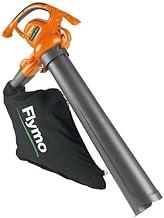


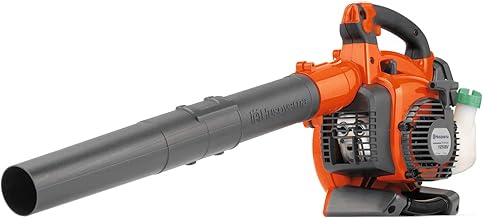


Choosing between Husqvarna leaf blowers is less about finding the machine with the biggest headline air-speed figure and more about matching the blower to the work involved. A compact battery model can be a better choice for routine garden clearing, while a professional petrol backpack blower is designed for substantially heavier workloads. Husqvarna's current UK range includes battery and petrol machines in handheld and backpack formats, with models aimed at both domestic and professional use. Before comparing individual models, consider four fundamentals: the amount and type of debris you normally clear, the size of the area, how long each session lasts, and whether you prioritise low noise and simple starting or maximum sustained blowing performance. Those factors often matter more in everyday use than a single specification. Blowing force, expressed in newtons (N), is one of the most useful figures when comparing machines within the same manufacturer's range. It provides an indication of the machine's ability to move material rather than simply how quickly air exits the nozzle. A higher blowing-force figure can become particularly valuable when dealing with wet leaves, compacted piles, grass clippings or heavier debris. However, more force is not automatically better for every garden. Excessive airflow can make delicate beds, loose mulch and gravel harder to manage precisely. For perspective, the Husqvarna 120iBV is rated at 7.2 N, the 525BX at 15 N, the 570BTS at 37 N, the 580BTS at 40 N and the 590BTS at 56 N on the current UK product information. These figures illustrate the substantial difference between compact homeowner equipment and high-output professional backpack blowers. Air speed, normally stated in metres per second, describes how quickly air travels at the specified nozzle. It can be useful when judging the ability to dislodge stubborn material, but it should not be considered in isolation. When comparing two blowers, look at air speed alongside blowing force and air volume. A machine with a high air-speed figure but comparatively modest air volume can behave differently from a blower designed to move a large quantity of air across a wider area. Air volume indicates how much air the blower moves over a given period. Husqvarna's UK specifications can express this as cubic metres per minute or cubic metres per hour, depending on the product page. High air volume can be particularly useful when gathering large quantities of leaves across lawns, driveways, paths or commercial grounds. For precision work in smaller spaces, controllability may be more important than maximum volume. Weight deserves more attention than it usually receives in buying guides. A blower may have excellent performance on paper, but if it is uncomfortable to carry or difficult to control, the practical advantage can disappear during longer sessions. Battery models are often listed with their weight excluding the battery, so the final carrying weight should be considered when comparing a bare tool with a petrol machine. For example, the 120iBV is listed at 4.6 kg excluding its battery, while the petrol 525BX is 4.4 kg complete. Professional backpack machines are considerably heavier, with the 570BTS at 11.2 kg, 580BTS at 11.8 kg and 590BTS at 11.9 kg. Noise is an important practical consideration for residential use. Manufacturer specifications distinguish between sound pressure at the operator's ear and sound power measurements, so these figures should not be treated as interchangeable. The difference between a compact battery blower and a large petrol backpack machine can be significant. Husqvarna lists the 120iBV at 84 dB(A) sound pressure at the operator's ear, compared with 103 dB(A) for the 570BTS and 106 dB(A) for the 590BTS. Noise should therefore form part of the purchase decision, particularly where the blower will be used around homes, neighbours, schools, shared spaces or other noise-sensitive environments. Always check applicable local restrictions and use appropriate hearing protection where required by the manufacturer's instructions and your working conditions. Battery-powered blowers are particularly attractive where convenient starting, lower operational emissions at the point of use and reduced routine engine maintenance are priorities. Husqvarna's 36 V BLi-X system is designed to cover applications ranging from lighter homeowner tasks to professional use, allowing compatible batteries to be shared across supported equipment. The 120iBV demonstrates another advantage of battery equipment: it combines blowing with vacuum functionality. The machine is designed to switch between blower and leaf-vacuum operation without tools, making it more versatile for users who want to collect rather than simply move garden debris. Battery models can be especially sensible for: Petrol equipment continues to make sense when sustained output, large-area productivity and high debris-moving capability take priority. Husqvarna's UK petrol range includes both handheld and backpack models for residential and professional applications. For example, the 570BTS uses a 65.6 cm³ engine and produces a stated maximum blowing force of 37 N. The 590BTS moves into a substantially larger class, with a 79.4 cm³ engine and a stated maximum blowing force of 56 N. Petrol is therefore worth considering when clearing large grounds, substantial leaf accumulation or heavier debris where productivity and sustained power are more important than compactness and low operational noise. The Husqvarna 120iBV occupies a very different position from the company's professional petrol backpack blowers. It is a cordless machine designed for small-to-medium tasks and combines blower and vacuum functions in one compact platform. Its brushless motor, user-friendly keypad and ergonomic design are intended to make routine garden cleaning easier to manage. The published specifications include 7.2 N maximum blowing force, 48 m/s maximum air speed at the round nozzle and 7.36 m³/min maximum air flow at the nozzle. Husqvarna lists the machine at 4.6 kg excluding the battery. One of its strongest buying points is not maximum power but versatility. The integrated vacuum capability means it can suit users who want to collect leaves rather than merely form piles for later removal. The 525BX is a handheld petrol blower positioned for professional use. Its 25.4 cm³ engine, 15 N maximum blowing force and 4.4 kg complete-product weight make it a useful middle ground between compact cordless equipment and much larger backpack machines. Husqvarna specifies a maximum air flow of 13 m³/min at the round nozzle and a maximum air speed of 70 m/s. The model also has adjustable tube length, an anti-vibration system and variable-speed control with cruise-control functionality. This specification profile makes the 525BX worth considering when a buyer wants petrol performance without moving immediately into the weight and bulk of a backpack blower. Adjustability is easy to overlook because it rarely appears in headline comparison tables. Tube length affects the relationship between the operator and the airflow, so an adjustable design can help accommodate different users and working positions. Likewise, variable-speed control is more useful than simply having a powerful engine. A controllable blower allows the operator to reduce output for delicate areas and increase it when moving heavier debris. The 570BTS is aimed at demanding tasks and uses a backpack configuration to distribute the machine's mass across the operator rather than requiring the complete blower to be supported by one hand. Husqvarna lists an integrated harness, LowVib vibration damping and multi-speed control with cruise-control capability. Its 65.6 cm³ engine produces a stated 2.9 kW output shaft power. The machine is rated at 37 N maximum blowing force, 22 m³/min maximum air flow at the round nozzle and 106 m/s maximum air speed. At 11.2 kg, it is clearly designed for a different workload from a compact domestic blower. The backpack format becomes more relevant as clearing sessions become longer and the amount of debris increases. The 580BTS increases the emphasis on high-output professional use. Husqvarna lists a 40 N maximum blowing force, 26 m³/min air flow at the round nozzle and 92 m/s maximum air speed. The machine weighs 11.8 kg and uses a petrol X-Torq engine. The 580BTS also incorporates Air Injection and a commercial-grade air filter, while the backpack harness uses wide shoulder straps intended to improve carrying comfort during demanding work. For buyers comparing the 570BTS and 580BTS, it is therefore sensible to look beyond air speed. The 580BTS has a higher maximum blowing-force figure and air-volume figure, while the 570BTS has a higher stated maximum air speed. The better choice depends on whether the work primarily involves shifting large quantities of material or dealing with debris where concentrated airflow is particularly useful. The 590BTS sits at the extreme high-output end of this comparison. Husqvarna lists a 79.4 cm³ engine, 4.1 kW output shaft power, 56 N maximum blowing force and 35 m³/min maximum air flow at the round nozzle. Its listed weight is 11.9 kg before considering fuel and other operating factors. The specification sheet also lists a 2.7-litre fuel tank and a maximum air speed of 96 m/s. The model uses an integrated harness and is designed around high productivity for demanding work. Its output makes it unnecessary for many ordinary domestic gardens. Buying a machine at this level simply because it has the largest specification can result in unnecessary weight, noise, fuel requirements and expense. It makes more sense where the workload genuinely benefits from that level of performance. A compact cordless model such as the 120iBV is likely to be the more logical starting point. The key advantages are manoeuvrability, cordless operation and the ability to switch to vacuum mode. Maximum power is unlikely to be the deciding factor for occasional clearing of leaves from paths, patios and lawns. Look for a balance between blowing force, weight, control and operating convenience. A machine that can be comfortably used for the entire clearing session is often more useful than a substantially more powerful model that is excessive for the property. A more powerful petrol handheld or professional battery machine may be justified where there are extensive lawns, long paths, mature trees or frequent accumulations of leaves. Compare the actual area to be cleared rather than choosing solely according to engine size. Professional backpack machines such as the 570BTS and 580BTS are designed around higher workloads, while the 590BTS provides a further step up in output. The choice should account for daily operating duration, debris type, transport requirements, operator comfort and maintenance arrangements. A useful comparison should use the same criteria for every model. Consider the following in order: Battery runtime should not be treated as one universal number. Actual operating time depends on the battery, power setting, workload and whether the machine is being used for light blowing, demanding blowing or vacuuming. The 120iBV is offered both as a tool-only configuration and as a kit including a battery and charger. The kit specification identifies a 36 V, 4 Ah, 144 Wh 40-B140 battery and a 40-C80 charger. If you already own compatible Husqvarna battery equipment, check the exact battery platform and model compatibility before buying. Do not assume that every Husqvarna battery is interchangeable simply because it carries the same brand name. One of the most common leaf-blower buying mistakes is treating the highest air-speed number as automatically representing the most powerful machine. Air speed describes velocity. Blowing force provides a more useful indication of the force available to move material. Air volume describes how much air is being moved. Together, these measurements give a more meaningful picture of performance. For example, the 570BTS is specified at 106 m/s maximum air speed and 37 N maximum blowing force, whereas the 580BTS is specified at 92 m/s and 40 N respectively. That difference demonstrates why comparing a single headline specification can produce misleading conclusions. A buyer should consider the complete performance profile and the type of debris being cleared. The choice is therefore not simply about which design is more powerful. It is about how the blower will be carried, controlled and used over the course of a typical working session. Maintenance requirements vary substantially between battery and petrol machines. Husqvarna provides dedicated categories for leaf-blower maintenance and spare parts, including air filters, fuel filters, spark plugs, air-purge components and maintenance kits. Husqvarna's UK range includes dedicated fuel and oil products for supported leaf blowers, reinforcing the importance of using the correct consumables rather than choosing lubricants purely on price or convenience. A professional backpack blower can be unnecessary for a modest domestic garden. More output brings additional weight, noise and operating considerations. Buy for the workload rather than for the largest specification. The opposite mistake is choosing a lightweight machine when the property contains large areas of mature woodland-style leaf fall or heavy debris. Repeatedly working at the limit of a small blower can make a simple job unnecessarily slow. Air speed is useful but incomplete. Always compare blowing force, air volume, weight and control characteristics as well. A battery blower sold without a battery and charger may look different from a complete kit when comparing total ownership requirements. Check exactly what is included before making a price comparison. Manufacturer specifications may use different measurement conventions. Battery blower weights can be quoted without the battery, while petrol machines may be listed without fuel. Make comparisons using realistic ready-to-work weights wherever possible. Long blower tubes, backpack harnesses and petrol equipment all require suitable storage. A compact cordless machine may be considerably easier to keep ready for occasional household use. Vacuum functionality is model-specific. The 120iBV includes a vacuum kit, whereas the 525BX, 570BTS, 580BTS and 590BTS specifications identify no vacuum kit as included. Once a suitable model has been identified, compare the exact product variant rather than relying only on the model name. Manufacturers and retailers can list different packages containing the tool alone or a tool with battery and charger. Accessories can materially change the usefulness of a blower. Husqvarna's UK accessory catalogue identifies compatible attachments and filters them by model, including nozzles, vacuum kits and gutter kits. The compatibility list covers a wide selection of handheld and backpack blowers. Do not assume that an accessory will fit simply because it is branded Husqvarna. Check the exact model compatibility before buying. Nozzle shape influences how airflow is delivered. A round nozzle and a flatter nozzle can provide different airflow characteristics and levels of concentration. The 525BX, for example, is supplied with round and flat nozzle options. A vacuum kit can be valuable for users who want to collect leaves instead of forming piles. This feature is particularly relevant to domestic users who need to transport garden waste after clearing. Where supported, a gutter kit can extend the blower's usefulness beyond ground-level leaf clearing. Compatibility and safe operating procedures should always be checked for the specific machine. Leaf blowers can move stones, twigs and other objects at high speed. Keep people, pets and vulnerable surfaces away from the operating area, and avoid directing airflow towards roads, pedestrians or other hazards. Eye and hearing protection may be appropriate depending on the machine and working conditions. Petrol machines can generate substantially higher noise levels than compact battery models, so the operator should pay particular attention to the manufacturer's safety instructions and the requirements of the working environment. Also consider what is being blown. Dry leaves are relatively easy to move, whereas stones, wet material and other dense debris can present additional hazards. Use controlled airflow rather than simply operating at maximum power throughout the entire job. Trying to blow directly against strong natural airflow can make collection slower. Where circumstances permit, use the prevailing wind to help move leaves towards the intended collection area. Rather than attempting to move an entire lawn in one pass, work in manageable sections. Forming progressively larger piles can make collection faster and reduce the amount of repeated blowing. Maximum output is not always necessary. Lower settings can provide better control around gravel, flowerbeds and delicate areas, while higher settings can be reserved for heavier accumulations. Airflow is generally more effective when directed across the surface rather than simply straight down into a pile. The objective is to get underneath or behind material sufficiently to start moving it. There is no single best Husqvarna leaf blower for every UK buyer. The most appropriate option depends on the scale of the work. These are use-case distinctions rather than claims that one machine is universally superior. A buyer should prioritise suitability, comfort, operating requirements and total ownership considerations. Yes. Husqvarna's UK range includes machines aimed at homeowner tasks as well as professional equipment. The appropriate model depends on garden size, debris levels, desired runtime and whether cordless convenience or maximum output is more important. Neither is universally better. Battery models are attractive for cordless convenience, straightforward operation and lower operational emissions at the point of use, while petrol models remain useful for demanding work where sustained high output is important. Among the models compared here, the 590BTS has the highest stated maximum blowing force at 56 N and the highest stated air volume at the round nozzle at 35 m³/min. Yes. The 120iBV is designed to switch between blower and vacuum functions without tools, and Husqvarna lists a vacuum kit as included equipment for the model. Husqvarna describes the 525BX as a handheld blower for professional use. It has a 25.4 cm³ engine, 15 N maximum blowing force and a 4.4 kg complete-product weight according to the current UK specification. The two are professional backpack petrol blowers, but their published specifications differ. The 570BTS is rated at 37 N maximum blowing force and 22 m³/min maximum air flow, while the 580BTS is rated at 40 N and 26 m³/min respectively. The 570BTS has a stated maximum air speed of 106 m/s, compared with 92 m/s for the 580BTS. It can be worthwhile for large areas or prolonged clearing because the harness supports the machine's weight rather than requiring continuous handheld support. For short domestic jobs, however, a handheld blower can be simpler and more convenient. Choose one if collecting and transporting leaves is an important part of your routine. If you only need to gather leaves into piles for manual collection, a blower-only machine may be sufficient. No. Air speed is only one part of blower performance. Blowing force and air volume should also be considered, alongside weight, controllability and the type of debris you need to move. Compare like-for-like configurations. A bare battery tool should not be compared directly with a kit containing a battery and charger. Also check supplied nozzles, harnesses, vacuum equipment and other accessories before judging the overall value. The best Husqvarna leaf blower is the one whose performance, format and operating characteristics match the work you actually do. For routine domestic maintenance, compact cordless equipment can offer a practical combination of convenience and manoeuvrability. For professional grounds work, the higher-output petrol and backpack machines provide a very different level of debris-moving capability. Before purchasing, compare the exact model specification, included equipment, realistic operating weight, noise information, power source, accessory compatibility and maintenance requirements. Then check today's retailer pricing and verified customer feedback for the precise model and package you are considering. Most importantly, do not select a blower solely because it has the biggest number in a comparison table. Blowing force, air volume, air speed, weight, controllability, runtime and user comfort all contribute to real-world usefulness. Matching those characteristics to the size of the job is the most reliable way to choose a Husqvarna leaf blower that makes sense for your needs.How to Choose the Right Husqvarna Leaf Blower for UK Gardens and Outdoor Spaces
Husqvarna Leaf Blower Comparison: What the Main Specifications Actually Mean
Blowing force
Air speed
Air volume
Weight
Noise
Battery vs Petrol Husqvarna Leaf Blowers
When a battery blower makes more sense
When petrol remains the stronger choice
Husqvarna 120iBV: Best Suited to Versatility and Smaller-Scale Clearing
Who should consider the 120iBV?
Husqvarna 525BX: A Compact Petrol Handheld for More Demanding Blowing
Why the adjustable tube matters
Husqvarna 570BTS: Professional Backpack Performance
Who is the 570BTS for?
Husqvarna 580BTS: High-Output Backpack Blower for Demanding Work
Husqvarna 590BTS: Maximum Output for Heavy Debris
Husqvarna Leaf Blower Comparison by Use Case
For a small domestic garden
For regular domestic leaf clearing
For large gardens
For grounds maintenance
How to Compare Husqvarna Leaf Blowers Properly
Understanding Battery Runtime Before Buying
Why Blowing Force and Air Speed Should Not Be Confused
Handheld vs Backpack Leaf Blowers
Advantages of handheld blowers
Advantages of backpack blowers
Maintenance Considerations for Husqvarna Leaf Blowers
Battery blower maintenance
Petrol blower maintenance
Common Husqvarna Leaf Blower Buying Mistakes
Buying too much power
Buying too little power
Comparing only air speed
Ignoring battery configuration
Ignoring the weight of fuel or batteries
Choosing a machine without considering storage
Assuming every blower can vacuum
What to Check Before Buying from a UK Retailer
Husqvarna Leaf Blower Accessories and Attachments
Nozzles
Vacuum kits
Gutter attachments
Safety and Responsible Use
How to Get Better Results from a Leaf Blower
Work with the wind where practical
Clear in stages
Use appropriate power
Keep the nozzle at a useful angle
Which Husqvarna Leaf Blower Is Best?
Husqvarna Leaf Blowers: Quick Decision Guide
Frequently Asked Questions About Husqvarna Leaf Blowers
Are Husqvarna leaf blowers suitable for domestic gardens?
Is a battery or petrol leaf blower better?
What is the most powerful Husqvarna leaf blower?
Is the Husqvarna 120iBV a leaf vacuum as well as a blower?
Is the Husqvarna 525BX a professional leaf blower?
What is the difference between the 570BTS and 580BTS?
Is a backpack leaf blower worth buying?
Should I choose a leaf blower with a vacuum function?
Does a higher air-speed figure always mean a better blower?
What should I check when comparing prices?
Final Buying Advice